
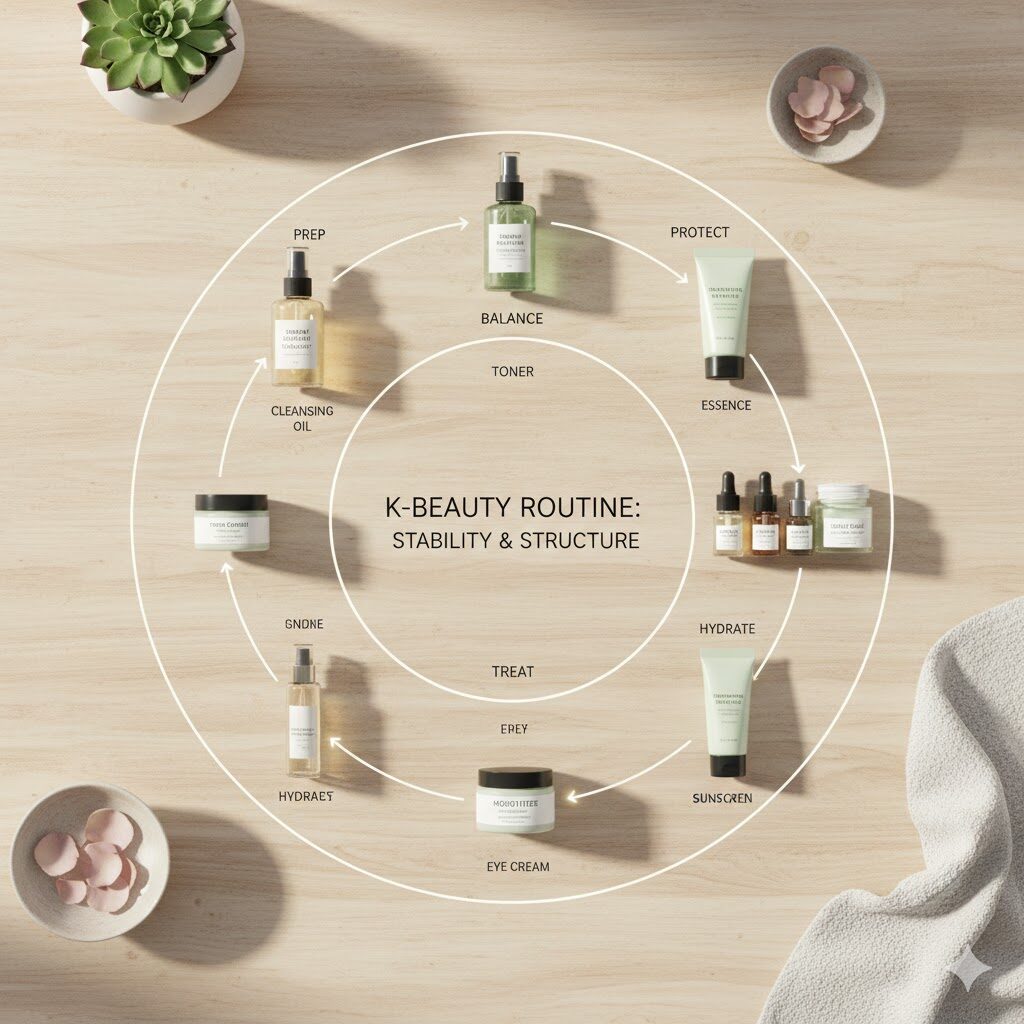
Global search data consistently shows growing interest in questions such as “why my skincare stopped working,” “skin barrier routine,” “skincare plateau,” and “how to fix dull skin despite good products.”
These queries come from users who are not beginners. They follow routines carefully, invest in reputable products, and yet experience a sudden loss of visible results.
This phenomenon is commonly misdiagnosed as product failure. In reality, most skincare plateaus are caused by routine imbalance, not ineffective ingredients.
K-Beauty offers a valuable framework for understanding this issue because it treats skincare as a long-term system, not a collection of quick fixes.
What a Skincare Plateau Actually Signals
A skincare plateau occurs when the skin no longer responds positively to a routine that once delivered results. Common signs include persistent dryness, dull tone, increased sensitivity, or products feeling ineffective despite consistent use.
Importantly, this is not true biological resistance. Skin does not permanently “adapt” to ingredients in the way antibiotics create resistance. Instead, plateaus emerge when the routine no longer matches the skin’s current environmental, behavioral, and seasonal conditions.
Why Adding Stronger Products Often Makes It Worse
When results slow down, many users instinctively increase exfoliation, add more actives, or layer additional treatments. While logical on the surface, this approach often accelerates instability.
K-Beauty philosophy emphasizes load distribution over intensity.
Instead of relying on a single aggressive step, Korean routines layer lightweight hydration and support across multiple stages. This reduces barrier stress and maintains skin responsiveness over time.
More steps do not mean harsher care.
They mean controlled, balanced delivery.
Routine Structure Matters More Than Product Novelty
One reason K-Beauty skincare routines continue to perform well globally is their focus on structural consistency.
Core principles include:
- Stable daily steps
- Texture adjustments based on climate and season
- Gradual routine changes instead of sudden overhauls
- Prioritizing barrier comfort before visible transformation
This predictable structure allows the skin to recover between stress cycles and prevents chronic irritation, which is a major contributor to long-term plateaus.
Ingredient Transparency Builds Sustainable Trust
K-Beauty content is known for explaining why ingredients are used, not just what they claim to do. This educational approach enables users to understand ingredient roles, avoid overlap, and modify routines logically.
From a search engine perspective, this type of content performs well because it aligns with user intent, increases reading time, and reduces bounce rates. Education-driven skincare content tends to rank more sustainably than trend-focused product lists.
Skincare as a Behavioral System, Not a Trend Cycle
In Korea, skincare routines evolve in response to:
- Seasonal dryness or humidity
- Environmental stress
- Sleep patterns and lifestyle changes
- Temporary skin sensitivity phases
Rather than chasing trends, routines adjust within a stable framework. This flexibility within structure explains why K-Beauty routines remain effective across regions, ages, and climates.
How to Reset a Skincare Plateau Conceptually
Effective resets rarely involve adding more products. Instead, they focus on:
- Simplifying temporarily
- Re-stabilizing hydration and barrier support
- Reintroducing changes slowly and intentionally
The goal is not dramatic overnight change, but restored skin responsiveness.
Why This Topic Attracts Strong Global Search Traffic
Search engines increasingly favor content that solves real user problems, avoids exaggerated claims, and encourages long engagement. Skincare plateau explanations meet all three criteria.
As consumers move away from quick-fix beauty narratives, structured and educational skincare content—especially rooted in K-Beauty logic—continues to gain visibility and trust worldwide.
The Hidden Role of Skin Barrier Fatigue
One overlooked cause of skincare plateaus is cumulative skin barrier fatigue. Even when products are gentle individually, repetitive daily exposure to actives, cleansing agents, and environmental stress gradually reduces the skin’s recovery capacity. This fatigue does not always present as irritation. Instead, it often appears as muted results, uneven texture, or products feeling less effective over time.
K-Beauty routines address this by inserting recovery-focused steps such as hydrating toners, emulsions, and barrier-support serums. These steps are not designed to add intensity, but to restore the skin’s baseline resilience so that active ingredients can function as intended.
Seasonal Mismatch as a Primary Plateau Trigger
Another major reason skincare routines stop working is seasonal mismatch. Many users maintain the same routine year-round despite significant changes in humidity, temperature, and UV exposure. What supports the skin in summer can silently destabilize it in winter, and vice versa.
Korean skincare culture normalizes seasonal reformulation of routines. Textures are adjusted, step order is modified, and hydration ratios are recalibrated. This seasonal responsiveness prevents long-term imbalance and helps maintain consistent skin behavior across the year.
Why Simplification Often Outperforms Product Switching
When routines fail, switching products is common. However, K-Beauty logic suggests that temporary simplification is often more effective than replacement. Removing unnecessary overlap allows the skin barrier to reset, making existing products functional again without introducing new variables.
This approach aligns with long-term skin stability rather than short-term novelty. It also reduces decision fatigue, which is increasingly relevant as consumers face overwhelming product choices.
The Psychological Component of Skincare Plateaus
Skincare plateaus are not purely biological. Expectation inflation plays a role. As users become accustomed to visible improvements, perception shifts, and subtle progress is dismissed as stagnation. Educational skincare content helps recalibrate expectations and reinforces realistic timelines.
This is one reason why educational K-Beauty content performs strongly in search engines. It resolves confusion rather than amplifying dissatisfaction.
Conclusion
Skincare plateaus are not failures of effort or product choice.
They are signals that the routine’s structure no longer aligns with the skin’s current needs.
K-Beauty succeeds globally because it prioritizes stability, education, and adaptability over instant results—making it a reliable reference point in modern skincare.
Key Takeaway
Skincare works best when structure comes before intensity.
Before adding more, stabilize what already exists.
⚠️ Disclaimer
This content is for informational purposes only and does not constitute medical advice.
Leave a Reply