Tag: k-beauty

  • The Structural Logic of K-Beauty: Why Layering Is a Strategy, Not a Trend

    Moving Beyond the 10-Step Myth
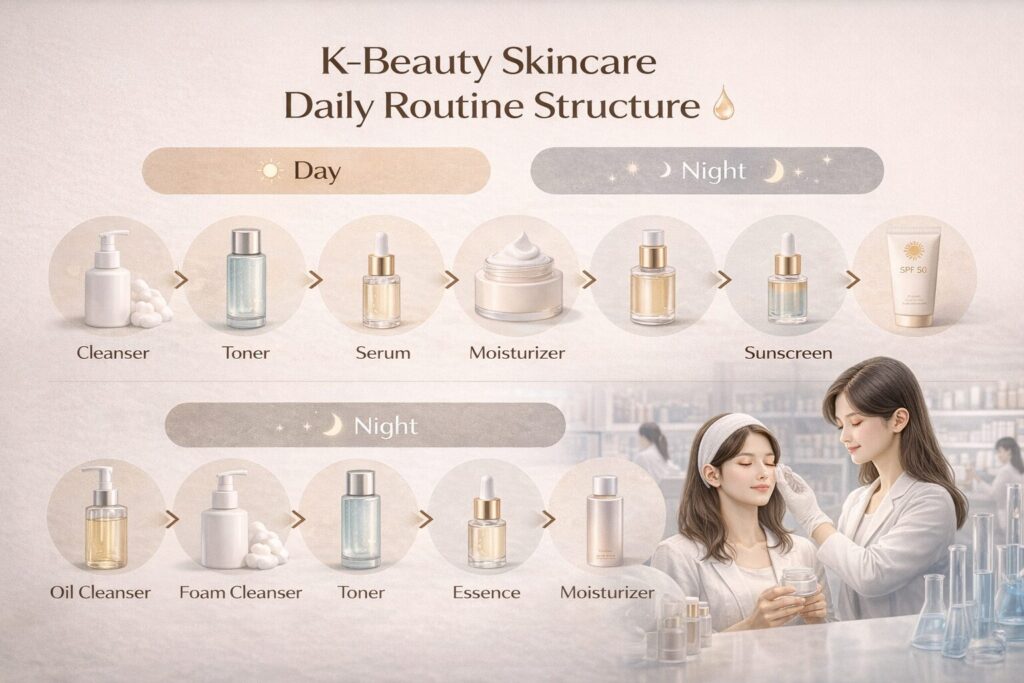
    K-Beauty skincare routine

    Global interest in K-Beauty often begins with curiosity about the so-called “10-step skincare routine.” While the number itself has become a popular talking point, it oversimplifies what Korean skincare is fundamentally about. K-Beauty is not a rigid formula defined by steps, but a structural approach to skin stabilization.

    Unlike many Western skincare philosophies that emphasize rapid transformation through high-strength active ingredients, K-Beauty focuses on creating an environment where the skin can recover, adapt, and maintain balance over time. Layering is not an aesthetic ritual—it is a deliberate strategy designed to support the skin’s natural repair mechanisms.

    The Science Behind Incremental Absorption

    At the core of K-Beauty lies the principle of incremental stimulation. Human skin is biologically wired to respond cautiously to sudden, intense changes. When exposed to a single high-concentration product, the skin barrier may interpret this as stress, leading to inflammation, redness, or reduced absorption efficiency.

    Layering lightweight, water-based formulas before applying richer creams creates a functional gradient. Each layer prepares the skin to receive the next, allowing active ingredients to penetrate without overwhelming the barrier. This approach mirrors how the skin naturally absorbs moisture from its environment—gradually, not abruptly.

    From a physiological standpoint, skin repair is not triggered by intensity but by consistency. The barrier strengthens when it receives steady, predictable signals rather than sporadic shocks.

    Why Predictability Is Essential for Skin Recovery

    One of the most common frustrations among skincare users is the perceived lack of immediate results. However, this impatience often misunderstands how skin recovery works. Before visible improvements can occur, the skin prioritizes stability. If a routine is frequently altered or overly aggressive, the skin redirects its resources toward defense rather than renewal.

    K-Beauty routines function as stabilizers. By maintaining a predictable structure through consistent layering, the skin gradually shifts out of survival mode. Over time, this calm state allows hydration levels to normalize, inflammation to subside, and texture to improve naturally.

    The widely admired “glass skin” effect is not the result of a single miracle product. It is the visible outcome of a barrier that is deeply hydrated, evenly supported, and free from chronic irritation.

    Strategic Consistency Versus Short-Term Intensity

    In skincare, effectiveness is not measured by strength alone but by appropriateness and duration. High-intensity treatments such as exfoliating acids or retinoids can be beneficial when used strategically. However, without a stable foundation, these treatments often contribute to long-term sensitivity and barrier damage.

    K-Beauty emphasizes sustainability over quick fixes. The skin is treated as a living ecosystem that responds to care patterns, not as a surface to be corrected. This philosophy aligns with a broader global shift toward mindful and preventative beauty practices.

    Layering allows users to adjust intensity without disrupting structure. On days when the skin feels compromised, lighter layers can maintain hydration without stress. On stronger days, targeted treatments can be added without destabilizing the routine.

    Why Layering Resonates With Global Skincare Trends

    The global popularity of K-Beauty skincare routines reflects a growing awareness that healthy skin is built, not forced. As consumers become more informed, interest shifts from instant results to long-term skin health. Educational content explaining why routines work—not just how—has gained higher engagement and trust across search platforms.

    This explains why search terms related to “K-Beauty skincare routine,” “skin barrier recovery,” and “layering skincare products” continue to perform well globally. Users are seeking frameworks, not shortcuts.

    Layering as a Behavioral System, Not a Cosmetic Habit

    One of the least discussed aspects of K-Beauty layering is its behavioral consistency. Skincare routines are not only chemical interactions but also behavioral patterns that train both the skin and the user. When routines become overly complex or frequently modified, adherence drops, and the skin loses exposure consistency.

    Layering simplifies decision-making. Each step has a defined role—hydration, calming, sealing—reducing uncertainty. This behavioral clarity contributes to routine stability, which directly affects long-term skin outcomes.

    From a systems perspective, K-Beauty routines reduce volatility. Rather than reacting aggressively to short-term skin issues, layering allows gradual correction while maintaining baseline hydration and protection.

    Environmental Adaptability and Seasonal Layering

    Another critical advantage of layering is environmental adaptability. Skin behaves differently depending on humidity, temperature, pollution exposure, and indoor climate conditions. K-Beauty routines are inherently modular, allowing users to add or remove layers without breaking the overall structure.

    In dry winters, hydration layers can be increased. In humid summers, lighter emulsions may replace occlusive creams. This adaptability ensures continuity while respecting environmental stressors, which is particularly relevant for global users living in diverse climates.

    Western skincare routines, by contrast, often rely on fixed-strength products that require complete replacement when conditions change. Layering avoids this disruption.

    Barrier-Centric Skincare and Long-Term Resilience

    Modern dermatological research increasingly emphasizes barrier health as the foundation of all visible skin improvements. A compromised barrier undermines the effectiveness of even the most advanced active ingredients.

    K-Beauty’s layering strategy aligns with this barrier-centric understanding. Each layer supports lipid balance, moisture retention, and inflammation control. Over time, this leads to increased tolerance, reduced sensitivity, and more predictable skin behavior.

    This is why users often report that their skin becomes “less reactive” after adopting consistent layering routines. The improvement is structural, not superficial.

    Why Global Users Are Shifting Toward Routine-Based Skincare

    As skincare literacy grows worldwide, users are moving away from product-centric thinking toward routine-based frameworks. Searches increasingly reflect this shift, focusing on “how routines work” rather than “which product is strongest.”

    K-Beauty appeals to this mindset because it provides a repeatable, logic-driven system. The emphasis on process over promises resonates with users seeking sustainable skin health rather than temporary visual fixes.

    This explains why K-Beauty content continues to perform well across global search engines. It addresses the “why” behind results, not just the “what.”

    Final Perspective: Stability Creates Results

    Skincare does not improve skin by force—it improves skin by cooperation. Layering works because it respects the skin’s natural preference for stability, rhythm, and gradual change.

    K-Beauty’s structural logic transforms skincare from a reactive habit into a long-term strategy. For global users, this approach offers clarity, adaptability, and trust—qualities that extend beyond trends and into lasting relevance.


    Key Takeaway: Skin Health Is Structural

    Understanding skincare as a structural process changes expectations and outcomes. Whether a routine includes three steps or ten, the objective remains the same: support the skin’s natural rhythm and recovery cycle. In K-Beauty, patience is not passive—it is an active strategy.

    Layering works because it respects how skin functions. It prioritizes stability before transformation and consistency before intensity. This is why K-Beauty continues to earn global trust—not as a trend, but as a system grounded in logic, biology, and long-term care.


    ⚠️ Disclaimer
    This content is for informational purposes only and does not constitute medical advice.
  • Why Skincare Routines Stop Working — And How K-Beauty Explains the Plateau

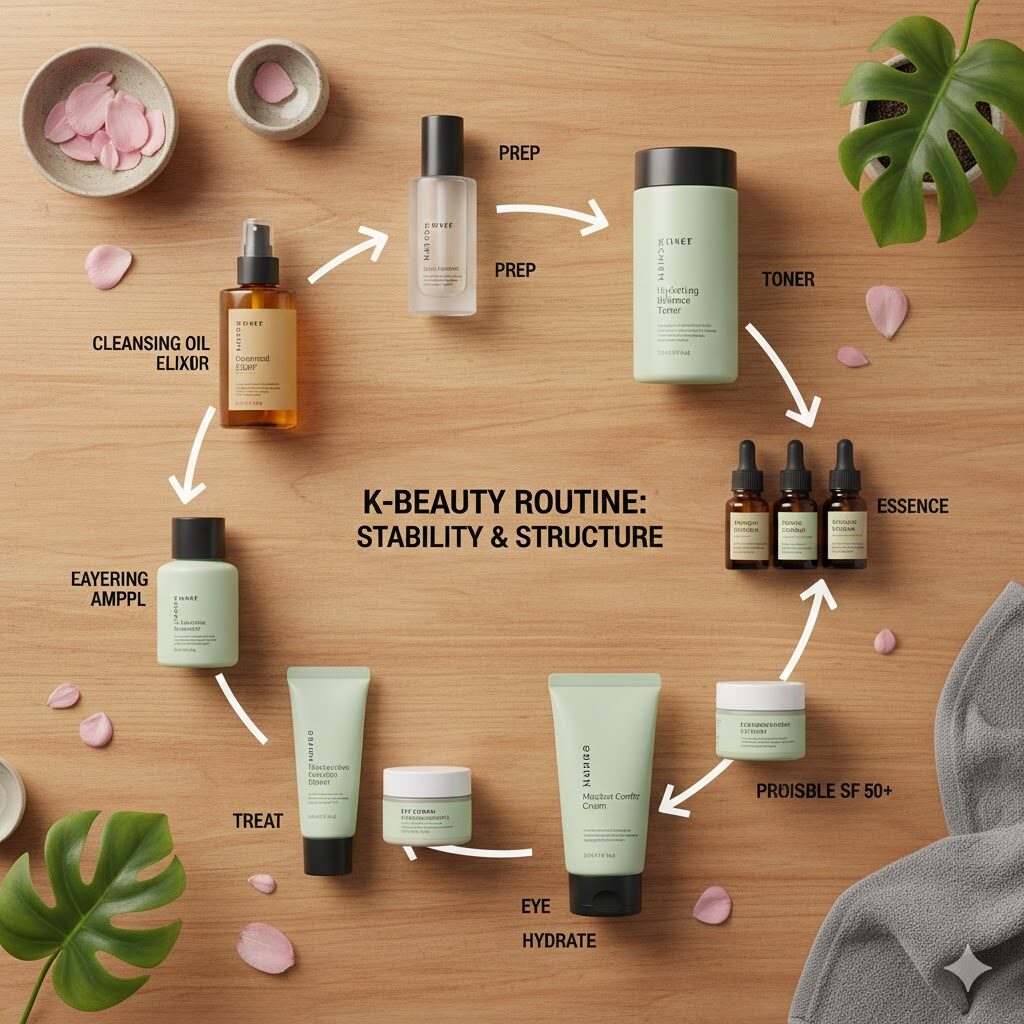
    K-Beauty skincare routine structure for skin plateau

    Global search data consistently shows growing interest in questions such as “why my skincare stopped working,” “skin barrier routine,” “skincare plateau,” and “how to fix dull skin despite good products.”
    These queries come from users who are not beginners. They follow routines carefully, invest in reputable products, and yet experience a sudden loss of visible results.

    This phenomenon is commonly misdiagnosed as product failure. In reality, most skincare plateaus are caused by routine imbalance, not ineffective ingredients.

    K-Beauty offers a valuable framework for understanding this issue because it treats skincare as a long-term system, not a collection of quick fixes.


    What a Skincare Plateau Actually Signals

    A skincare plateau occurs when the skin no longer responds positively to a routine that once delivered results. Common signs include persistent dryness, dull tone, increased sensitivity, or products feeling ineffective despite consistent use.

    Importantly, this is not true biological resistance. Skin does not permanently “adapt” to ingredients in the way antibiotics create resistance. Instead, plateaus emerge when the routine no longer matches the skin’s current environmental, behavioral, and seasonal conditions.


    Why Adding Stronger Products Often Makes It Worse

    When results slow down, many users instinctively increase exfoliation, add more actives, or layer additional treatments. While logical on the surface, this approach often accelerates instability.

    K-Beauty philosophy emphasizes load distribution over intensity.
    Instead of relying on a single aggressive step, Korean routines layer lightweight hydration and support across multiple stages. This reduces barrier stress and maintains skin responsiveness over time.

    More steps do not mean harsher care.
    They mean controlled, balanced delivery.


    Routine Structure Matters More Than Product Novelty

    One reason K-Beauty skincare routines continue to perform well globally is their focus on structural consistency.

    Core principles include:

    • Stable daily steps
    • Texture adjustments based on climate and season
    • Gradual routine changes instead of sudden overhauls
    • Prioritizing barrier comfort before visible transformation

    This predictable structure allows the skin to recover between stress cycles and prevents chronic irritation, which is a major contributor to long-term plateaus.


    Ingredient Transparency Builds Sustainable Trust

    K-Beauty content is known for explaining why ingredients are used, not just what they claim to do. This educational approach enables users to understand ingredient roles, avoid overlap, and modify routines logically.

    From a search engine perspective, this type of content performs well because it aligns with user intent, increases reading time, and reduces bounce rates. Education-driven skincare content tends to rank more sustainably than trend-focused product lists.


    Skincare as a Behavioral System, Not a Trend Cycle

    In Korea, skincare routines evolve in response to:

    • Seasonal dryness or humidity
    • Environmental stress
    • Sleep patterns and lifestyle changes
    • Temporary skin sensitivity phases

    Rather than chasing trends, routines adjust within a stable framework. This flexibility within structure explains why K-Beauty routines remain effective across regions, ages, and climates.


    How to Reset a Skincare Plateau Conceptually

    Effective resets rarely involve adding more products. Instead, they focus on:

    1. Simplifying temporarily
    2. Re-stabilizing hydration and barrier support
    3. Reintroducing changes slowly and intentionally

    The goal is not dramatic overnight change, but restored skin responsiveness.


    Why This Topic Attracts Strong Global Search Traffic

    Search engines increasingly favor content that solves real user problems, avoids exaggerated claims, and encourages long engagement. Skincare plateau explanations meet all three criteria.

    As consumers move away from quick-fix beauty narratives, structured and educational skincare content—especially rooted in K-Beauty logic—continues to gain visibility and trust worldwide.


    The Hidden Role of Skin Barrier Fatigue

    One overlooked cause of skincare plateaus is cumulative skin barrier fatigue. Even when products are gentle individually, repetitive daily exposure to actives, cleansing agents, and environmental stress gradually reduces the skin’s recovery capacity. This fatigue does not always present as irritation. Instead, it often appears as muted results, uneven texture, or products feeling less effective over time.

    K-Beauty routines address this by inserting recovery-focused steps such as hydrating toners, emulsions, and barrier-support serums. These steps are not designed to add intensity, but to restore the skin’s baseline resilience so that active ingredients can function as intended.

    Seasonal Mismatch as a Primary Plateau Trigger

    Another major reason skincare routines stop working is seasonal mismatch. Many users maintain the same routine year-round despite significant changes in humidity, temperature, and UV exposure. What supports the skin in summer can silently destabilize it in winter, and vice versa.

    Korean skincare culture normalizes seasonal reformulation of routines. Textures are adjusted, step order is modified, and hydration ratios are recalibrated. This seasonal responsiveness prevents long-term imbalance and helps maintain consistent skin behavior across the year.

    Why Simplification Often Outperforms Product Switching

    When routines fail, switching products is common. However, K-Beauty logic suggests that temporary simplification is often more effective than replacement. Removing unnecessary overlap allows the skin barrier to reset, making existing products functional again without introducing new variables.

    This approach aligns with long-term skin stability rather than short-term novelty. It also reduces decision fatigue, which is increasingly relevant as consumers face overwhelming product choices.

    The Psychological Component of Skincare Plateaus

    Skincare plateaus are not purely biological. Expectation inflation plays a role. As users become accustomed to visible improvements, perception shifts, and subtle progress is dismissed as stagnation. Educational skincare content helps recalibrate expectations and reinforces realistic timelines.

    This is one reason why educational K-Beauty content performs strongly in search engines. It resolves confusion rather than amplifying dissatisfaction.


    Conclusion

    Skincare plateaus are not failures of effort or product choice.
    They are signals that the routine’s structure no longer aligns with the skin’s current needs.

    K-Beauty succeeds globally because it prioritizes stability, education, and adaptability over instant results—making it a reliable reference point in modern skincare.


    Key Takeaway

    Skincare works best when structure comes before intensity.
    Before adding more, stabilize what already exists.


    ⚠️ Disclaimer

    This content is for informational purposes only and does not constitute medical advice.


    🔗 Related Research Topics

  • Why K-Beauty Skincare Routines Continue to Gain Global Trust

    k beauty daily skincare lifestyle

    K-Beauty is no longer confined to South Korea’s domestic beauty market. Over the past decade, global search behavior has demonstrated a steady rise in interest around terms such as “K-Beauty skincare routine,” “Korean skincare steps,” and “glass skin method.” These queries consistently appear across North America, Europe, and Southeast Asia, indicating that global consumers are no longer simply curious about Korean products—they are actively adopting Korean skincare logic.

    This global trust did not emerge by chance. It is rooted in a structural philosophy that prioritizes skin stability, long-term adaptation, and user education over short-term visual transformation.


    1. A System Designed for Long-Term Skin Stability

    One of the most recognizable features of K-Beauty is the multi-step routine. While often misunderstood as excessive, the structure is deliberately designed to minimize irritation and cumulative stress on the skin.

    Instead of forcing rapid results through a single, high-intensity product, K-Beauty routines distribute hydration, nourishment, and treatment across multiple lightweight layers. Each step performs a focused function, allowing the skin to absorb benefits gradually. This reduces barrier disruption and supports long-term balance rather than temporary improvement followed by regression.


    2. Ingredient Logic Over Product Hype

    K-Beauty places unusual emphasis on ingredient transparency. Rather than marketing vague promises, Korean skincare education frequently explains the role, concentration, and interaction of individual ingredients.

    This ingredient-oriented philosophy allows users to evaluate products based on skin condition rather than trend cycles. Over time, this approach builds trust because users understand why something works, not merely that it works. In global markets increasingly skeptical of exaggerated claims, this transparency becomes a competitive advantage.


    3. Skincare as a Cultural Habit, Not a Trend

    In Korean culture, skincare is not treated as an occasional corrective measure. It is a daily habit that evolves with environmental conditions such as season, humidity, pollution, and lifestyle changes.

    This adaptive mindset aligns closely with global movements toward sustainability and mindful consumption. Instead of chasing novelty, K-Beauty encourages consistency with flexibility—maintaining core steps while adjusting intensity based on skin feedback.


    4. Education-Centered Content and User Trust

    A significant portion of K-Beauty’s global influence comes from educational content. Tutorials, routine breakdowns, and long-term usage explanations dominate Korean skincare resources.

    From a search engine perspective, this type of content performs strongly. Educational articles increase dwell time, reduce bounce rates, and signal relevance to search algorithms. Users remain engaged because expectations are set realistically, and progress is framed as gradual rather than instant.


    5. Why K-Beauty Works for Sensitive and Plateaued Skin

    Many global users turn to K-Beauty after experiencing irritation or stagnation with aggressive routines. The layered, low-irritation structure is particularly suitable for sensitive skin types and for individuals who feel their skincare results have plateaued.

    Rather than introducing stronger actives, K-Beauty often resolves stagnation by restoring hydration balance and barrier integrity—foundational elements frequently overlooked in Western routines.


    6. Common Misapplications of K-Beauty Routines

    Despite its strengths, misuse can undermine results. Over-layering without understanding ingredient overlap, frequent product switching, and trend-driven experimentation often create instability.

    The effectiveness of K-Beauty lies not in the number of steps, but in strategic consistency. A routine should evolve slowly, guided by skin response rather than social media influence.


    7. Resetting a Skincare Routine the K-Beauty Way

    When performance declines, adding more products rarely solves the problem. K-Beauty emphasizes routine resets—temporarily simplifying steps, reducing actives, and prioritizing hydration and barrier repair.

    This reset phase allows the skin to recalibrate, creating a stable baseline before gradual optimization resumes.


    Conclusion

    The global trust in K-Beauty skincare routines is built on logic, transparency, and structural discipline. Rather than promising instant transformation, K-Beauty offers a sustainable framework for skin health. Its success lies not in novelty, but in repeatable, adaptable systems that respect the skin’s natural limits.


    Key Takeaway

    Skincare plateaus are not failures of products.
    They are signals of behavioral saturation and structural instability.
    Before adding more, stabilize what already exists.


    ⚠️ Disclaimer
    This content is for informational purposes only and does not constitute medical advice.

    🔗 Related Research Topics

    Skin Adaptation Cycles

    Behavioral Skincare Plateaus

    Routine Stability Models


  • Why Americans Are Searching for Korean Beauty Clinics, Devices, and Skin Treatments in 2026

    From Products to Procedures, and Why Korea Became the Global Reference Point

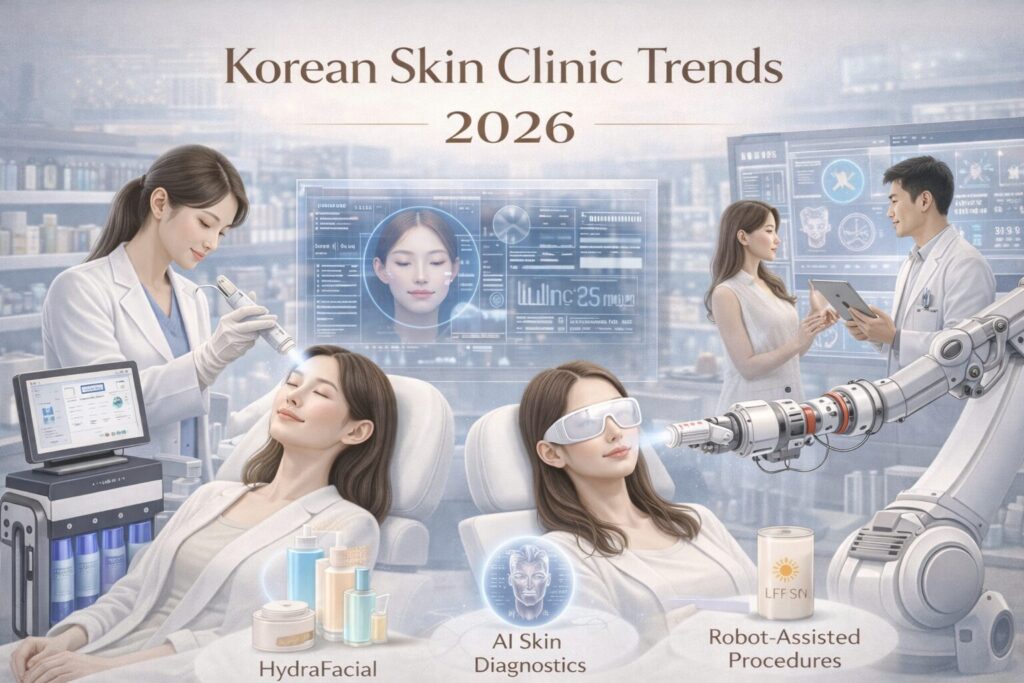
    korean-skin-clinic-trends-2026

    For most American consumers, Korean beauty once meant skincare products.
    Sheet masks, glass-skin routines, and viral serums dominated search results and social media feeds.

    But in 2026, something has changed.

    Search behavior, travel data, export statistics, and medical spending trends all point in the same direction:
    global interest has moved beyond Korean products to Korean beauty systems.

    Americans are no longer just asking what Koreans use.
    They are asking what Koreans actually do for their skin.


    The Shift Behind the Search Explosion

    Recent global data explains why keywords like:

    • “Korean skin clinic”
    • “beauty tourism Korea”
    • “Korean laser treatment”
    • “HIFU Korea”
    • “best skin treatment in Seoul”

    are climbing rapidly in U.S.-based searches.

    In 2025 alone:

    • Korea recorded record-high cosmetics exports, with the United States becoming the largest destination, surpassing China.
    • Medical tourism spending exceeded USD 1.5 billion, with skin clinics accounting for the majority.
    • Monthly medical tourism spending set new records consecutively, driven by repeat dermatological procedures rather than surgery.
    • Foreign spending on beauty and wellness products rose over 40% year-over-year.

    These are not influencer trends.
    They are consumer behavior shifts.


    Why Skin Clinics — Not Plastic Surgery — Lead the Boom

    When Americans hear “medical tourism,” plastic surgery often comes to mind.
    But Korea’s growth tells a different story.

    The fastest-growing segment is dermatology-based aesthetic care.

    Why?

    Because skin treatments are:

    • Non-invasive or minimally invasive
    • Safe for repeat visits
    • Focused on skin quality, aging prevention, and maintenance
    • Suitable for both men and women
    • Compatible with busy schedules

    Procedures like laser toning, RF tightening, and ultrasound lifting do not require weeks of recovery.
    Many international visitors schedule them between sightseeing, shopping, and work travel.

    Skin care has become maintenance, not transformation.


    The Technology Factor Americans Are Paying Attention To

    Another reason U.S. interest has intensified is Korea’s dominance in energy-based beauty devices.

    Korean companies lead globally in:

    • High-Intensity Focused Ultrasound (HIFU)
    • Radiofrequency (RF) skin tightening
    • Laser-based rejuvenation
    • AI-guided skin diagnostics

    At CES 2026, Korean beauty-tech companies stood out not for branding, but for results-oriented design.

    Key features repeatedly highlighted:

    • AI-based skin analysis
    • Device + skincare integration
    • Data-backed personalization
    • Longevity-focused treatment models

    For American consumers increasingly skeptical of marketing claims, visible outcomes supported by data matter more than ever.


    Why Korea Succeeded Where Others Didn’t

    Many countries offer cosmetic procedures.
    Few have built a repeatable, scalable beauty ecosystem.

    Korea’s advantage comes from integration:

    • Clinics that work with device manufacturers
    • Skincare designed for pre- and post-procedure care
    • Retail channels aligned with clinical routines
    • Tourism infrastructure adapted to medical visitors

    Instead of selling isolated products, Korea exports processes.

    This is why visitors don’t just leave with treatments — they leave with routines, subscriptions, and long-term purchasing habits.


    What China’s Reopening Means — and Why It Matters Less to Americans

    Recent discussions around China potentially easing restrictions on Korean businesses have made headlines.

    But for U.S. consumers and brands, the significance is limited.

    During years of geopolitical uncertainty, Korean beauty companies:

    • Diversified markets aggressively
    • Built strong U.S., Japanese, and European positions
    • Reduced reliance on any single country

    China now represents optional upside, not core survival.

    For Americans, this reinforces confidence:
    Korean beauty’s growth is globally anchored, not regionally fragile.


    Why the U.S. and Japan Anchor the “Second Wave” of K-Beauty

    The current phase of Korean beauty expansion is no longer driven by novelty.

    It is stabilized by two markets:

    United States

    • High acceptance of clinical skincare
    • Large and diverse consumer base
    • Strong online-to-offline conversion
    • Retail presence across Amazon, ULTA, Costco, Walmart, and TikTok Shop

    Japan

    • Deep skincare culture
    • Long-term routine adoption
    • High trust in safety and efficacy
    • Strong offline retail networks

    Together, these markets shape K-Beauty’s second wave — defined by consistency, not virality.


    Why This Topic Attracts Massive U.S. Search Volume

    This subject intersects multiple high-interest American concerns:

    • Aging populations
    • Preventive health
    • Results-driven skincare
    • Experiential travel
    • Technology-backed wellness

    Korean beauty sits at the center of all five.

    That is why search interest continues to rise — not spike and fade.


    What Americans Are Really Searching For

    The underlying question is no longer:

    “What Korean product is trending?”

    It has become:

    “What actually works — and how do I experience it myself?”

    This explains the growth of:

    • Beauty-focused travel
    • Clinic-centered routines
    • Device-assisted home care
    • Subscription-based skincare

    Beauty is no longer judged at purchase.
    It is judged over months, outcomes, and repeat behavior.


    Final Takeaway for Global Readers

    Korean beauty in 2026 is not about exporting creams or trends.

    It is about exporting:

    • Systems
    • Technology
    • Experience
    • Trust

    That is why Americans are not just buying Korean beauty —
    they are traveling, researching, and restructuring their routines around it.

    This shift is not temporary.

    It is the new baseline.

    This article is for informational purposes only and does not constitute medical or professional advice.

  • How K-Beauty Became a Daily Habit, Not a Trend

    The Real Structure Behind Korean Skincare’s Global Staying Power

    Most beauty trends arrive loudly and disappear quietly.

    K-Beauty followed a different path.
    Instead of promising dramatic overnight results, Korean skincare built something less flashy—but far more durable: daily usability.

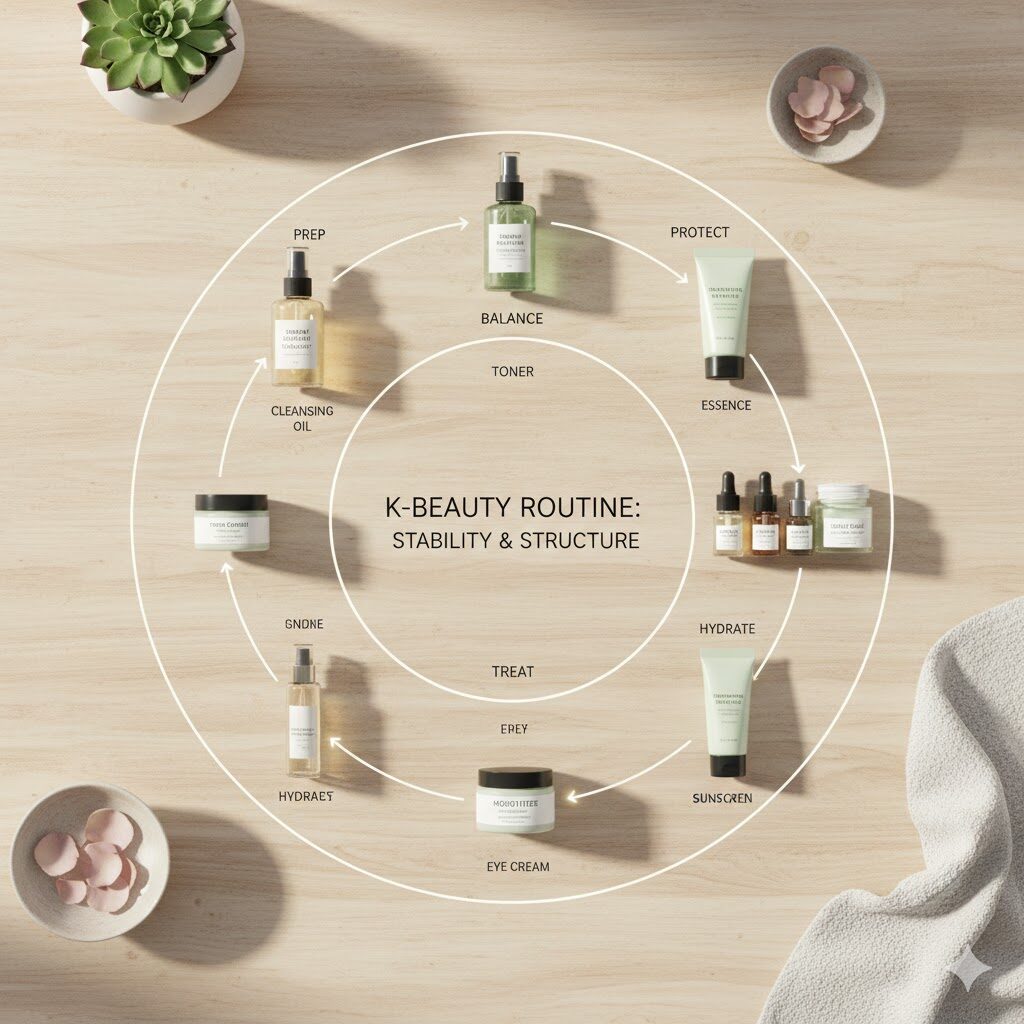
    k-beauty skincare daily routine structure

    This is why people who try K-Beauty rarely describe it as “amazing” on day one.
    Instead, they say things like:

    • “My skin feels calmer.”
    • “Nothing reacts badly anymore.”
    • “I stopped thinking about my skincare.”

    That reaction is not accidental. It is the result of how K-Beauty products are designed, tested, and integrated into everyday routines.

    This article explains why K-Beauty works as a habit, how ingredients and routines are structured for long-term use, and why this approach continues to spread globally—without relying on hype.


    K-Beauty Is Built Around Frequency, Not Intensity

    Many Western skincare products are optimized for impact:
    high concentrations, short treatment cycles, visible changes.

    K-Beauty starts with a different assumption:

    “If someone uses this every day for months, will their skin still feel comfortable?”

    That single question reshapes everything.

    • Ingredient levels are chosen for repeat exposure
    • Textures are designed to layer without overload
    • Irritation risk is minimized before performance is maximized

    This is why K-Beauty products often feel gentle—even boring—at first.
    They are not designed to impress once. They are designed to stay.


    Ingredient Strategy: Familiar, Adjustable, Testable

    K-Beauty does not chase novelty for its own sake.
    Instead, it repeatedly refines ingredients consumers already tolerate well.

    Common patterns include:

    • Iterative upgrades of known ingredients
      (e.g., different molecular weights, fermentation, encapsulation)
    • Pairing active ingredients with calming buffers
    • Testing combinations rather than single “hero” ingredients

    This approach reduces consumer risk.

    A product that fails quickly disappears from daily routines.
    A product that feels safe gets reused, repurchased, and recommended.

    That is why ingredients like centella asiatica, panthenol, ceramides, and hyaluronic acid remain central—despite not being new.


    Why Multi-Step Routines Actually Increase Retention

    At first glance, K-Beauty routines appear complicated.

    In reality, they are modular, not rigid.

    Each step has a narrow role:

    • cleanse
    • hydrate
    • support barrier
    • seal moisture

    If one step is skipped, the routine still functions.

    This flexibility matters internationally.
    Different climates, lifestyles, and skin types can adjust the routine without abandoning it.

    Instead of forcing consistency, K-Beauty allows adaptation—and that keeps users engaged longer.


    Consumer Testing Shapes Product Evolution

    One of K-Beauty’s least visible strengths is how quickly consumer feedback loops back into development.

    Common feedback that influences reformulation includes:

    • absorption speed before makeup
    • seasonal heaviness or dryness
    • fragrance persistence
    • interaction with sunscreen or foundation

    Rather than treating these as minor issues, brands often:

    • adjust textures
    • split lines by skin condition
    • release seasonal or sensitivity-focused variants

    This creates a sense that products are responsive, not static.

    Over time, that responsiveness builds trust.


    Why Global Consumers Describe K-Beauty as “Reliable”

    When surveyed, international users rarely describe K-Beauty as revolutionary.

    Instead, they say it feels:

    • predictable
    • calming
    • easy to continue using

    That reliability matters more than novelty.

    In saturated beauty markets, trust outperforms excitement.
    Products that quietly work become part of routine life—and routines are difficult to replace.

    This is how K-Beauty shifted from trend status into a stable category in markets like the U.S. and Japan.


    K-Beauty Sells Behavior, Not Transformation

    The real export of K-Beauty is not products.
    It is behavior.

    • daily care instead of corrective fixes
    • moderation instead of extremes
    • maintenance instead of constant change

    This mindset aligns naturally with modern wellness culture, where consistency is valued more than intensity.

    That is why K-Beauty does not need constant reinvention.
    It evolves by staying useful.


    Key Takeaway

    K-Beauty’s global success is not driven by trends or viral moments.

    It is driven by:

    • repeatable routines
    • low-risk ingredient strategies
    • consumer-driven refinement
    • and products designed to be lived with, not showcased

    That combination turns skincare into habit—and habits last.


    Disclaimer
    This article is for general informational purposes only and does not provide medical or dermatological advice.

    This article is for informational purposes only and does not constitute medical or professional advice.

  • 🌟 Why K-Beauty Is No Longer Just a Cosmetics Industry

    From Snail Mucin to RNA: How the Competitive Standard Is Being Redefined Beyond APR

    This article analyzes how K-beauty is evolving from an ingredient-driven cosmetics industry into a design- and biotechnology-driven platform industry, based on recent global media coverage, CES 2026 trends, and market data.


    🌿 1. Snail Mucin Was Not the End — It Was the Proof of Concept

    One of the most iconic milestones that embedded K-beauty into global consumer awareness was the rise of snail mucin serum.

    The significance of snail mucin did not lie in its novelty alone.
    Rather, it marked the first moment when Korean cosmetics began competing globally on functional narratives—repair, regeneration, and efficacy—rather than branding aesthetics.

    According to BBC coverage, the global expansion driven by snail mucin was not a fleeting trend but evolved into a measurable economic engine.
    By 2024, Korea’s cosmetics market reached USD 13 billion, and by the first half of 2025, Korea surpassed France to become the world’s second-largest cosmetics exporter, following the United States.

    Yet the critical insight is this:

    👉 Snail mucin was never meant to be the final answer.

    It was the language of first-generation K-beauty, defined by:

    • Novel ingredients
    • Strong storytelling
    • Rapid virality through platforms like TikTok

    This success inevitably led the industry to a structural question:

    What happens when novelty is no longer enough?


    🔬 2. From Ingredient Competition to Design Competition

    By 2026, the defining shift in K-beauty is no longer subtle.

    The industry is moving away from asking:

    “What ingredient did you use?”

    and toward asking:

    “What biological process are you regulating, and how?”

    At CES 2026, K-beauty companies shared several common signals:

    • AI-based skin and scalp diagnostics
    • Integration of devices and cosmetics
    • Personalization, longevity, and data-driven routines
    • Emphasis on clinical evidence, reproducibility, and validation

    This is not about adding technology to cosmetics.
    It represents a deeper structural change:

    Cosmetics are becoming outcomes.
    Design, data, and biological control are becoming the product.

    The fragrance industry underwent this transition earlier.
    Where perfumery once depended on intuition and sensory talent, today’s leading fragrance houses operate at the level of molecular structures, diffusion kinetics, and receptor interactions.

    Skincare and aesthetics are now following the same trajectory.


    🧬 3. Why RNA Signals the Post-PDRN Era

    PDRN helped popularize the concept of regeneration in K-beauty.
    RNA interference (siRNA), however, introduces a fundamentally different logic.

    • Supporting regeneration → Regulating gene expression
    • Repairing damage → Preventing damage at the causal layer

    This distinction redefines the market itself.

    Cosmetics are not pharmaceuticals.
    But when cosmetic technologies approach gene expression pathways, they occupy a new strategic position.

    Most importantly:

    👉 Cosmetics and cosmeceuticals face significantly lower regulatory and clinical barriers than drugs.

    By positioning RNA-based technology as:

    • a cosmetic
    • a functional cosmetic
    • or a medical-device-adjacent solution

    companies dramatically reduce development time, cost, and regulatory friction.

    This is why global players are increasingly translating biotech into cosmetic language.


    🌍 4. Why L’Oréal Treats RNA as a Long-Term Strategic Option

    L’Oréal’s sustained focus on hair loss, biotech, and RNA is often misinterpreted as short-term diversification.

    For a company approaching a USD 300 billion market capitalization, the true objective is different.

    Not:

    • next quarter’s revenue ❌

    But:

    • the competitive standard of the next 10–20 years

    L’Oréal understands that:

    • Ingredient trends are easily copied
    • Marketing advantages decay quickly
    • Oils, textures, and formulations create low entry barriers

    RNA occupies the strategic gray zone between cosmetics and biotechnology—where:

    • technical gaps widen
    • data accumulation compounds
    • late entrants struggle to catch up

    RNA, for L’Oréal, is not a product bet.
    It is an option on the future structure of the industry.


    🚀 5. Why APR Is No Longer Competing Inside K-Beauty

    Recent discussions around APR often focus on short-term stock movements.
    From an industry perspective, this misses the point.

    APR has already exited intra–K-beauty competition.

    Evidence includes:

    • Sustained Top 3 skincare ranking at ULTA (U.S.)
    • Direct competition with global brands
    • Integration of devices, cosmetics, and data
    • High operating margins with strong overseas exposure

    APR’s true peer group is no longer domestic cosmetics brands.
    It now competes with global skincare platform companies.

    The structural implication is clear:

    👉 APR is not the end state—it is the present.

    Which raises the next strategic question:

    What defines the post-APR competitive standard?

    Repeatedly, the answer points toward RNA, biotech, and design-driven platforms.


    🌱 Conclusion: K-Beauty Has Already Moved Beyond Cosmetics

    Snail mucin symbolized K-beauty’s global breakthrough.
    APR demonstrates its arrival into the global mainstream.

    RNA represents something else entirely:

    👉 a test of how far K-beauty can move beyond the cosmetics industry itself.

    This transition is gradual—but irreversible.

    The market no longer asks:
    “What was applied?”
    It asks:
    “Why does it work?”


    🌼 Key Takeaway

    K-beauty is no longer defined by ingredients or trends.
    It is entering an era shaped by design, data, and biotechnology.

    Snail mucin was the beginning.
    APR is the present.
    RNA defines the next question.

    This article is for informational purposes only and does not constitute medical or professional advice.

  • 🍜 Managing Facial Puffiness After Late-Night Ramen

    It’s About Recovery, Not Punishment

    Late-night ramen is comforting, social, and for many people, unavoidable.
    Yet the next morning, the mirror often tells a different story: facial puffiness, swollen eyelids, and a heavier look around the cheeks.

    This reaction is common—and importantly, it is not a sign of failure or poor discipline.
    Facial puffiness after a salty late meal is largely about fluid balance and recovery timing, not the food itself.

    This article focuses on what actually helps the body recover naturally, without extreme restrictions or harsh routines.


    🍜 Why facial puffiness happens after ramen

    Facial puffiness is a fluid distribution issue, not a fat issue. Several factors combine after a late-night, high-sodium meal.

    🧂 Salt and temporary fluid retention

    Ramen broth is typically high in sodium. Sodium helps the body retain water, which is useful for hydration balance—but overnight, that retained water has fewer places to go.

    💧 Overnight fluid shifts

    When you lie down, gravity no longer helps fluids drain downward.
    As a result, fluid tends to redistribute toward the face and eye area, where tissue is softer.

    ⏰ Late meals reduce recovery time

    Eating late shortens the window your body has to rebalance fluids before sleep.
    This doesn’t mean late meals are “bad”—it simply means the body hasn’t finished adjusting by morning.

    👉 The key point: puffiness is about where water temporarily stays, not what you ate.


    ⭐ Quick fixes that actually help (and why)

    Many people instinctively reach for harsh methods. What works better is gentle encouragement of circulation.

    🥄 Cold spoon under the eyes (1–2 minutes)

    Light cooling causes mild vasoconstriction, which can reduce visible swelling temporarily.
    Short and localized is enough—long exposure isn’t necessary.

    💦 Cool water splash (gentle, repeated)

    A few gentle splashes stimulate surface circulation without stressing the skin barrier.

    🧍 Stay upright after waking

    Remaining upright for 20–30 minutes after waking allows gravity to assist natural fluid drainage.

    ✔ The goal is flow, not force.


    💧 Morning priorities: support recovery, don’t overwhelm it

    The morning after a late meal is not the time for aggressive detox routines.

    💧 Small amounts of lukewarm water

    Sipping water helps rebalance fluid distribution without shocking the system.
    Very cold water can sometimes cause temporary constriction that slows flow.

    🚿 Gentle, brief cleansing

    Avoid long hot showers on the face. Heat can increase redness and temporary swelling.

    🧊 Short, targeted cooling

    If you use cooling tools or patches, keep sessions short and focused.

    👉 Think assistance, not intervention.


    🧴 Skincare: less does more when swelling is present

    Facial puffiness can be worsened by heavy textures.

    🧴 Choose fast-absorbing hydration

    Light gels or fluid emulsions absorb quickly and avoid trapping excess surface fluid.

    🧴 Keep layers minimal

    Multiple layers can increase occlusion, which may prolong puffiness.

    🧴 Skip rich creams in the morning

    Heavier products are better saved for nighttime recovery.

    ✔ When swelling is present, simplicity supports normalization.


    🚶‍♀️ Wake up circulation beyond the face

    Facial puffiness often reflects whole-body circulation, not just local skin issues.

    🚶‍♀️ Light stretching

    Gentle full-body movement helps restart lymphatic flow after sleep.

    👣 Short walks

    Even a 5–10 minute walk can noticeably improve facial appearance by mid-morning.

    🧘‍♂️ Neck and shoulder release

    Tension in the neck and shoulders can slow drainage from the face.
    Simple mobility can make a visible difference.


    🌼 Psychological reset: why mindset matters

    One overlooked factor is stress response.

    Feeling guilty about food can elevate stress hormones, which may actually slow recovery.
    Viewing puffiness as temporary and normal helps the body return to balance more smoothly.


    🌼 Key takeaway

    Facial puffiness after late-night ramen is a signal, not a failure.
    It reflects fluid timing, posture, and recovery—not poor choices.

    With gentle routines and patience, puffiness typically fades naturally within hours.


    Closing thought

    Late meals happen.
    What matters more than restriction is how you support recovery afterward.

    To our global readers:
    How do you usually manage facial puffiness after a late meal?


    Disclaimer
    This content is for general informational purposes only and does not provide medical advice.


    This article is for informational purposes only and does not constitute medical or professional advice.

  • 🌸 K-Beauty 2026: The Second Wave in the U.S. and Japan

    Why Global Expansion Is Now Structural, Not Trend-Driven


    🧭 Introduction: Why 2026 Is Not About Trends Anymore

    The K-beauty market entering 2026 is fundamentally different from its previous growth phases.
    What once expanded through viral ingredients, influencer-driven exposure, and short product life cycles is now entering a structurally driven phase defined by repeat usage, long-term routines, and system-level trust.

    This shift explains why the current expansion cannot be understood as a continuation of the past.
    The market is no longer asking what is trending, but rather:

    • What can be used consistently over time?
    • What integrates into daily routines without friction?
    • What has proven usability across different regulatory and cultural environments?

    In this context, the United States and Japan have emerged as the most important reference markets.
    Not because they are the fastest-moving, but because they are the most structurally demanding.


    🇺🇸 Why the U.S. Became the Anchor of the Second Wave

    Historically, success in the U.S. market has been difficult for foreign beauty brands.
    The market is saturated, highly competitive, and dominated by brands with long-established trust, distribution power, and regulatory familiarity.

    For this reason, early K-beauty success in the U.S. during the 2016–2019 period was largely trend-based.
    Sheet masks, cushion foundations, and novelty ingredients gained attention — but most failed to translate into long-term shelf presence.

    What has changed since 2024 is not the marketing intensity, but the evaluation standard.

    In 2026, U.S. retailers such as ULTA and Sephora increasingly prioritize:

    • SKU expansion rather than one-off hero products
    • Repurchase rates over first-time sales
    • Integration of devices, routines, and skincare systems
    • Data-backed performance instead of anecdotal claims

    Brands that succeed under these conditions are not competing within “K-beauty.”
    They are competing directly with global dermatological and skincare platforms.

    This is why U.S. success now functions as structural validation, not popularity confirmation.


    🇯🇵 Japan Is Not Late — It Is Selective

    Japan is often misunderstood as a slow-moving beauty market.
    In reality, it is one of the most selective.

    Japanese consumers tend to reject rapid trend cycles and instead reward:

    • Long-term safety records
    • Minimal formulation variability
    • High compatibility with daily life
    • Conservative but reliable efficacy

    For K-beauty, entry into Japan marks a different type of transition.
    It signals movement away from novelty-based differentiation toward routine-level adoption.

    Unlike China, where rapid scaling was historically driven by social virality and price efficiency,
    Japan functions as a market of validation through restraint.

    Success in Japan indicates that a product or system can survive beyond marketing cycles and operate as part of everyday life.
    This makes Japan a crucial component of the second wave — not as a growth accelerator, but as a stability benchmark.


    🌊 Why This Is a “Second Wave,” Not a Repeat of the First

    The first global wave of K-beauty was defined by visibility.
    The second wave is defined by durability.

    First WaveSecond Wave
    Ingredient noveltySystem design
    Viral exposureRepeat usage
    Short life cyclesLong-term routines
    Single productsIntegrated platforms

    This transition explains why fewer brands dominate more shelf space,
    and why expansion now happens through SKU depth, device linkage, and data accumulation rather than constant product launches.

    In other words, the market is consolidating around brands that can sustain usage — not just attention.


    🌱 What the Second Wave Means for K-Beauty Going Forward

    The implications for K-beauty are structural:

    • Brands evolve into platforms
    • Marketing gives way to usage metrics
    • Claims are replaced by measurable outcomes
    • Export success depends on integration, not scale alone

    K-beauty is no longer evaluated as a category.
    It is evaluated as a system of skincare behavior.

    This explains why the second wave is geographically anchored in markets that reward discipline, consistency, and trust — namely, the U.S. and Japan.


    🌼 Conclusion: K-Beauty Has Entered Its Post-Trend Era

    The expansion of K-beauty in 2026 is not louder than before — it is quieter and more durable.

    The United States validates scalability.
    Japan validates sustainability.

    Together, they define the second wave — one that no longer depends on novelty, but on structure.

    The question facing K-beauty is no longer how fast it can spread,
    but how long it can last.


    🌸 Key Takeaway

    K-beauty’s second global wave is being shaped not by trends, but by structural adoption.
    The U.S. and Japan are not following the movement — they are defining its standards.


    Disclaimer : This post is for general informational purposes only and does not constitute investment or medical advice.


    This article is for informational purposes only and does not constitute medical or professional advice.