
From Medical Tourism to Beauty Systems: The New Global Standard Emerging in 2026
Introduction: Beauty Is No Longer Bought — It Is Experienced
Until recently, global beauty travel followed a predictable pattern.
Tourists flew to Paris, Milan, or New York to shop for luxury cosmetics, perfumes, and fashion. Beauty was something you bought, packaged in branded bags and duty-free boxes.
That pattern is breaking.
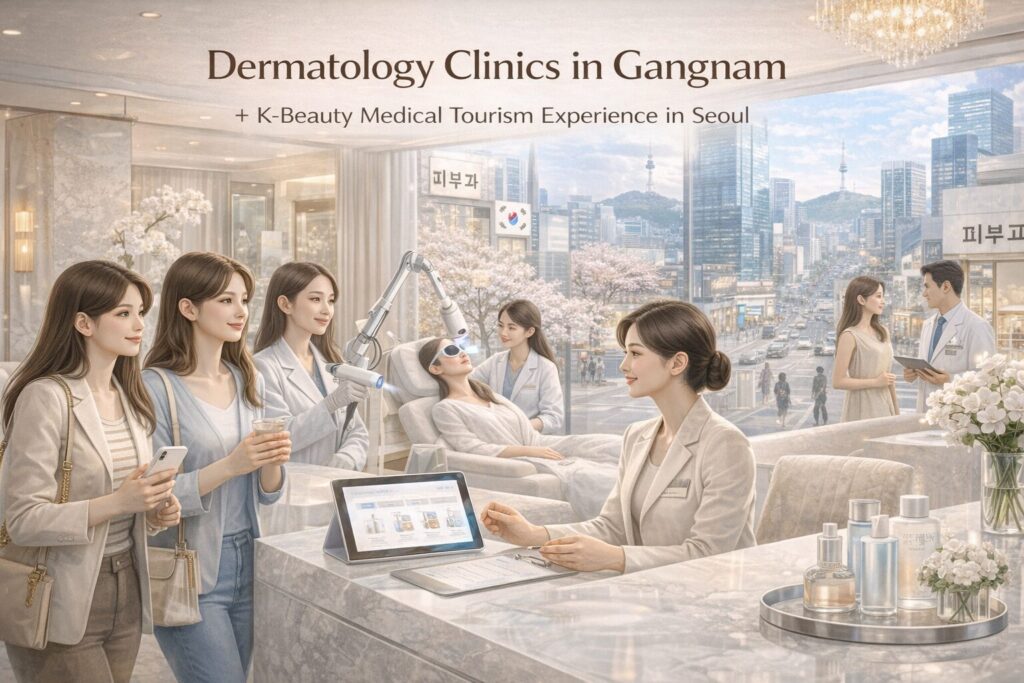
In 2026, a growing share of global travelers are flying to Seoul not to shop — but to manage their skin, consult dermatologists, receive treatments, and return home with prescriptions rather than handbags.
This is not a fad.
It is a structural transformation at the intersection of beauty, healthcare, and lifestyle systems.
1. The Rise of “Glowmads”: Why Beauty Now Shapes Travel Decisions
According to Skyscanner’s Travel Trends 2026, 33% of global travelers now rank local beauty culture as a primary factor when choosing a destination.
These travelers are labeled “Glowmads” — beauty nomads who plan trips around:
- Skin treatments
- Wellness routines
- Dermatology clinics
- Pharmacies and functional products
Seoul is repeatedly identified as a global symbol of beauty culture, not because of branding, but because of results, accessibility, and systemization.
2. From Luxury Shopping to Clinics and Pharmacies
On the streets of Myeongdong and Gangnam, the visual signals have changed.
- Large duty-free shopping bags → declining
- Small pharmacy envelopes → increasing
- Dermatology appointment cards → common
This shift reflects a deeper change in consumer logic:
Global consumers no longer prioritize ownership. They prioritize outcomes.
According to coverage cited by The Wall Street Journal, many American women now structure trips to Seoul around pre-booked dermatology schedules, often receiving procedures that would cost USD 5,000+ in the U.S. for a fraction of that price — even after accounting for flights and lodging.
3. Medical Tourism Data Confirms Structural Demand
The numbers support what streets and clinics already show.
Based on Daol Securities data for 2025 medical tourism spending:
- Total medical tourism spending: KRW 2.08 trillion (+65% YoY)
- Dermatology spending: KRW 1.19 trillion (+87% YoY)
- December 2025 alone marked another all-time high, surpassing prior records
This growth is not seasonal.
It reflects repeat visitation, referral-based demand, and system trust.
Skin care has moved from a discretionary expense to a planned health-and-lifestyle investment.
4. Why Seoul Wins: Cost Is Not the Only Advantage
Price alone does not explain this migration.
Seoul’s advantage lies in integration:
- Dermatology clinics operate alongside pharmacies
- Functional cosmetics align with post-procedure care
- Devices, prescriptions, and skincare routines are synchronized
This ecosystem produces continuity, something fragmented systems struggle to replicate.
In contrast, many Western markets separate:
- Medical care
- Beauty products
- Lifestyle routines
Seoul compresses them into a single, navigable experience.
5. CES 2026: Beauty Enters the Systems Era
At CES 2026, Korean companies did not present beauty as packaging or branding.
They presented:
- AI-based skin diagnostics
- Home-use medical-grade devices
- Data-driven personalization
- Longevity-focused design
The message was clear:
Cosmetics are no longer the product. The system is.
Beauty is now treated as an output, not an input.
6. From Products to Platforms: Why This Matters Globally
This explains why global companies are repositioning:
- Hair loss, scalp care, and longevity receive more investment
- Biotechnology and RNA research enter beauty pipelines
- Devices blur boundaries between cosmetics and medical tools
Positioning innovation as:
- cosmetics
- functional cosmetics
- or medical-device-adjacent solutions
allows faster development, lower regulatory friction, and global scalability.
This is not accidental. It is strategic.
7. America’s Parallel Shift: Food, Health, and Skin Converge
The same structural logic appears in the U.S.
Reports such as America’s Real Food Revolution highlight how consumers increasingly link:
- diet
- inflammation
- metabolic health
- skin aging
Beauty is being reframed as a systemic health signal, not a surface issue.
This convergence explains why:
- Skin clinics attract travelers
- Pharmacies outperform luxury counters
- Subscription routines replace impulse purchases
8. Why This Trend Is Built for Search, Not Virality
This topic performs well for search engines because it answers persistent questions, not momentary curiosity:
- Why is Seoul cheaper and more effective for skin care?
- Why are tourists skipping luxury shopping?
- Why is beauty becoming medicalized?
- Why does K-beauty feel more “systematic” than Western brands?
These are high-intent, evergreen queries, ideal for long-term organic traffic and ad relevance.
Conclusion: Beauty Has Become Infrastructure
What the world is witnessing is not a K-beauty trend.
It is the emergence of beauty as infrastructure:
- healthcare
- data
- lifestyle
- and repeatable outcomes
Seoul did not become a beauty destination because of hype.
It became one because it solved beauty as a system.
And systems — unlike trends — scale globally.
🔑 Key Takeaway for Global Readers
People no longer travel to buy beauty.
They travel to become better maintained.
In 2026, beauty is no longer something you apply.
It is something you design, manage, and experience.
This article is for informational purposes only and does not constitute medical or professional advice.
Leave a Reply