
Category: ④ Lifestyle, Culture & Seasonality

  • Why Skincare Routines Stop Working — And How K-Beauty Explains the Plateau

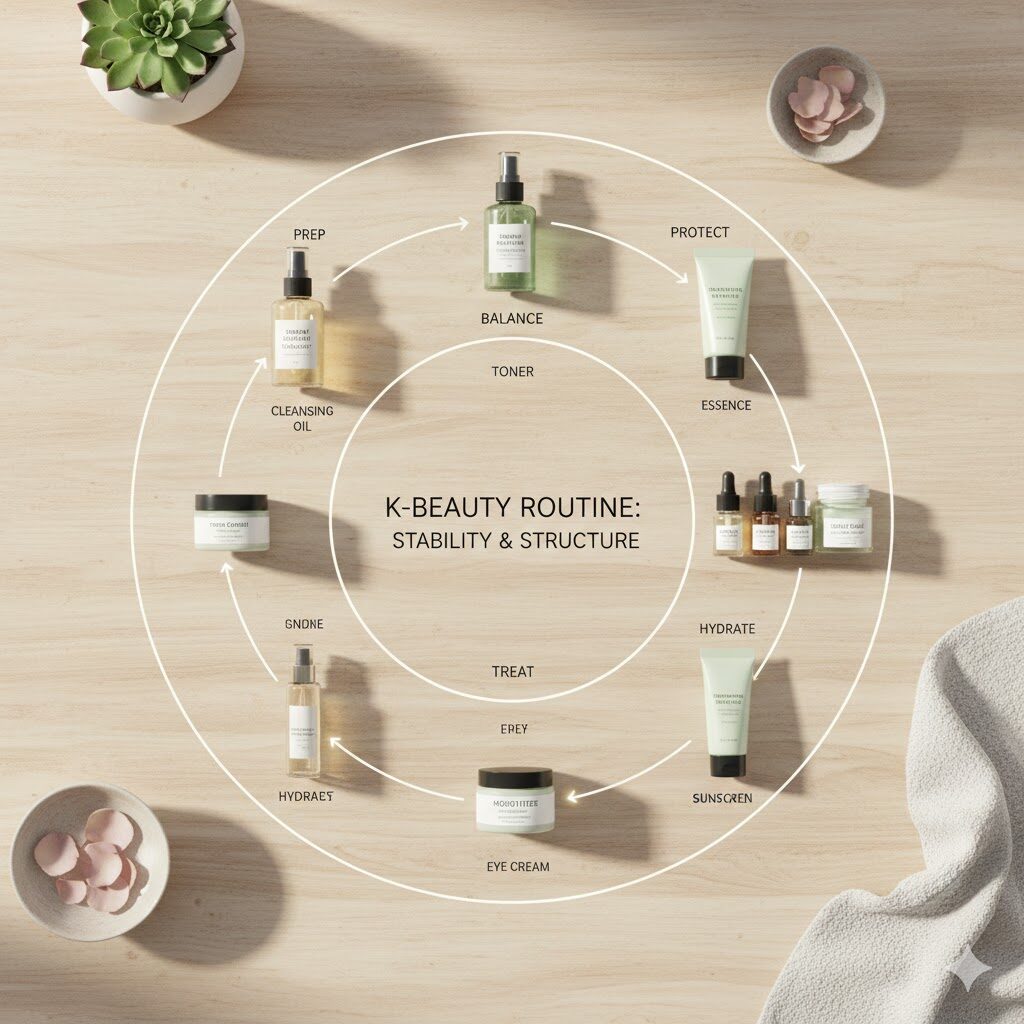
    K-Beauty skincare routine structure for skin plateau

    Global search data consistently shows growing interest in questions such as “why my skincare stopped working,” “skin barrier routine,” “skincare plateau,” and “how to fix dull skin despite good products.”
    These queries come from users who are not beginners. They follow routines carefully, invest in reputable products, and yet experience a sudden loss of visible results.

    This phenomenon is commonly misdiagnosed as product failure. In reality, most skincare plateaus are caused by routine imbalance, not ineffective ingredients.

    K-Beauty offers a valuable framework for understanding this issue because it treats skincare as a long-term system, not a collection of quick fixes.


    What a Skincare Plateau Actually Signals

    A skincare plateau occurs when the skin no longer responds positively to a routine that once delivered results. Common signs include persistent dryness, dull tone, increased sensitivity, or products feeling ineffective despite consistent use.

    Importantly, this is not true biological resistance. Skin does not permanently “adapt” to ingredients in the way antibiotics create resistance. Instead, plateaus emerge when the routine no longer matches the skin’s current environmental, behavioral, and seasonal conditions.


    Why Adding Stronger Products Often Makes It Worse

    When results slow down, many users instinctively increase exfoliation, add more actives, or layer additional treatments. While logical on the surface, this approach often accelerates instability.

    K-Beauty philosophy emphasizes load distribution over intensity.
    Instead of relying on a single aggressive step, Korean routines layer lightweight hydration and support across multiple stages. This reduces barrier stress and maintains skin responsiveness over time.

    More steps do not mean harsher care.
    They mean controlled, balanced delivery.


    Routine Structure Matters More Than Product Novelty

    One reason K-Beauty skincare routines continue to perform well globally is their focus on structural consistency.

    Core principles include:

    • Stable daily steps
    • Texture adjustments based on climate and season
    • Gradual routine changes instead of sudden overhauls
    • Prioritizing barrier comfort before visible transformation

    This predictable structure allows the skin to recover between stress cycles and prevents chronic irritation, which is a major contributor to long-term plateaus.


    Ingredient Transparency Builds Sustainable Trust

    K-Beauty content is known for explaining why ingredients are used, not just what they claim to do. This educational approach enables users to understand ingredient roles, avoid overlap, and modify routines logically.

    From a search engine perspective, this type of content performs well because it aligns with user intent, increases reading time, and reduces bounce rates. Education-driven skincare content tends to rank more sustainably than trend-focused product lists.


    Skincare as a Behavioral System, Not a Trend Cycle

    In Korea, skincare routines evolve in response to:

    • Seasonal dryness or humidity
    • Environmental stress
    • Sleep patterns and lifestyle changes
    • Temporary skin sensitivity phases

    Rather than chasing trends, routines adjust within a stable framework. This flexibility within structure explains why K-Beauty routines remain effective across regions, ages, and climates.


    How to Reset a Skincare Plateau Conceptually

    Effective resets rarely involve adding more products. Instead, they focus on:

    1. Simplifying temporarily
    2. Re-stabilizing hydration and barrier support
    3. Reintroducing changes slowly and intentionally

    The goal is not dramatic overnight change, but restored skin responsiveness.


    Why This Topic Attracts Strong Global Search Traffic

    Search engines increasingly favor content that solves real user problems, avoids exaggerated claims, and encourages long engagement. Skincare plateau explanations meet all three criteria.

    As consumers move away from quick-fix beauty narratives, structured and educational skincare content—especially rooted in K-Beauty logic—continues to gain visibility and trust worldwide.


    The Hidden Role of Skin Barrier Fatigue

    One overlooked cause of skincare plateaus is cumulative skin barrier fatigue. Even when products are gentle individually, repetitive daily exposure to actives, cleansing agents, and environmental stress gradually reduces the skin’s recovery capacity. This fatigue does not always present as irritation. Instead, it often appears as muted results, uneven texture, or products feeling less effective over time.

    K-Beauty routines address this by inserting recovery-focused steps such as hydrating toners, emulsions, and barrier-support serums. These steps are not designed to add intensity, but to restore the skin’s baseline resilience so that active ingredients can function as intended.

    Seasonal Mismatch as a Primary Plateau Trigger

    Another major reason skincare routines stop working is seasonal mismatch. Many users maintain the same routine year-round despite significant changes in humidity, temperature, and UV exposure. What supports the skin in summer can silently destabilize it in winter, and vice versa.

    Korean skincare culture normalizes seasonal reformulation of routines. Textures are adjusted, step order is modified, and hydration ratios are recalibrated. This seasonal responsiveness prevents long-term imbalance and helps maintain consistent skin behavior across the year.

    Why Simplification Often Outperforms Product Switching

    When routines fail, switching products is common. However, K-Beauty logic suggests that temporary simplification is often more effective than replacement. Removing unnecessary overlap allows the skin barrier to reset, making existing products functional again without introducing new variables.

    This approach aligns with long-term skin stability rather than short-term novelty. It also reduces decision fatigue, which is increasingly relevant as consumers face overwhelming product choices.

    The Psychological Component of Skincare Plateaus

    Skincare plateaus are not purely biological. Expectation inflation plays a role. As users become accustomed to visible improvements, perception shifts, and subtle progress is dismissed as stagnation. Educational skincare content helps recalibrate expectations and reinforces realistic timelines.

    This is one reason why educational K-Beauty content performs strongly in search engines. It resolves confusion rather than amplifying dissatisfaction.


    Conclusion

    Skincare plateaus are not failures of effort or product choice.
    They are signals that the routine’s structure no longer aligns with the skin’s current needs.

    K-Beauty succeeds globally because it prioritizes stability, education, and adaptability over instant results—making it a reliable reference point in modern skincare.


    Key Takeaway

    Skincare works best when structure comes before intensity.
    Before adding more, stabilize what already exists.


    ⚠️ Disclaimer

    This content is for informational purposes only and does not constitute medical advice.


    🔗 Related Research Topics

  • Why K-Beauty Skincare Routines Continue to Gain Global Trust

    k beauty daily skincare lifestyle

    K-Beauty is no longer confined to South Korea’s domestic beauty market. Over the past decade, global search behavior has demonstrated a steady rise in interest around terms such as “K-Beauty skincare routine,” “Korean skincare steps,” and “glass skin method.” These queries consistently appear across North America, Europe, and Southeast Asia, indicating that global consumers are no longer simply curious about Korean products—they are actively adopting Korean skincare logic.

    This global trust did not emerge by chance. It is rooted in a structural philosophy that prioritizes skin stability, long-term adaptation, and user education over short-term visual transformation.


    1. A System Designed for Long-Term Skin Stability

    One of the most recognizable features of K-Beauty is the multi-step routine. While often misunderstood as excessive, the structure is deliberately designed to minimize irritation and cumulative stress on the skin.

    Instead of forcing rapid results through a single, high-intensity product, K-Beauty routines distribute hydration, nourishment, and treatment across multiple lightweight layers. Each step performs a focused function, allowing the skin to absorb benefits gradually. This reduces barrier disruption and supports long-term balance rather than temporary improvement followed by regression.


    2. Ingredient Logic Over Product Hype

    K-Beauty places unusual emphasis on ingredient transparency. Rather than marketing vague promises, Korean skincare education frequently explains the role, concentration, and interaction of individual ingredients.

    This ingredient-oriented philosophy allows users to evaluate products based on skin condition rather than trend cycles. Over time, this approach builds trust because users understand why something works, not merely that it works. In global markets increasingly skeptical of exaggerated claims, this transparency becomes a competitive advantage.


    3. Skincare as a Cultural Habit, Not a Trend

    In Korean culture, skincare is not treated as an occasional corrective measure. It is a daily habit that evolves with environmental conditions such as season, humidity, pollution, and lifestyle changes.

    This adaptive mindset aligns closely with global movements toward sustainability and mindful consumption. Instead of chasing novelty, K-Beauty encourages consistency with flexibility—maintaining core steps while adjusting intensity based on skin feedback.


    4. Education-Centered Content and User Trust

    A significant portion of K-Beauty’s global influence comes from educational content. Tutorials, routine breakdowns, and long-term usage explanations dominate Korean skincare resources.

    From a search engine perspective, this type of content performs strongly. Educational articles increase dwell time, reduce bounce rates, and signal relevance to search algorithms. Users remain engaged because expectations are set realistically, and progress is framed as gradual rather than instant.


    5. Why K-Beauty Works for Sensitive and Plateaued Skin

    Many global users turn to K-Beauty after experiencing irritation or stagnation with aggressive routines. The layered, low-irritation structure is particularly suitable for sensitive skin types and for individuals who feel their skincare results have plateaued.

    Rather than introducing stronger actives, K-Beauty often resolves stagnation by restoring hydration balance and barrier integrity—foundational elements frequently overlooked in Western routines.


    6. Common Misapplications of K-Beauty Routines

    Despite its strengths, misuse can undermine results. Over-layering without understanding ingredient overlap, frequent product switching, and trend-driven experimentation often create instability.

    The effectiveness of K-Beauty lies not in the number of steps, but in strategic consistency. A routine should evolve slowly, guided by skin response rather than social media influence.


    7. Resetting a Skincare Routine the K-Beauty Way

    When performance declines, adding more products rarely solves the problem. K-Beauty emphasizes routine resets—temporarily simplifying steps, reducing actives, and prioritizing hydration and barrier repair.

    This reset phase allows the skin to recalibrate, creating a stable baseline before gradual optimization resumes.


    Conclusion

    The global trust in K-Beauty skincare routines is built on logic, transparency, and structural discipline. Rather than promising instant transformation, K-Beauty offers a sustainable framework for skin health. Its success lies not in novelty, but in repeatable, adaptable systems that respect the skin’s natural limits.


    Key Takeaway

    Skincare plateaus are not failures of products.
    They are signals of behavioral saturation and structural instability.
    Before adding more, stabilize what already exists.


    ⚠️ Disclaimer
    This content is for informational purposes only and does not constitute medical advice.

    🔗 Related Research Topics

    Skin Adaptation Cycles

    Behavioral Skincare Plateaus

    Routine Stability Models


  • 🌍 Why the World Is Flying to Seoul for Skin Care

    From Medical Tourism to Beauty Systems: The New Global Standard Emerging in 2026


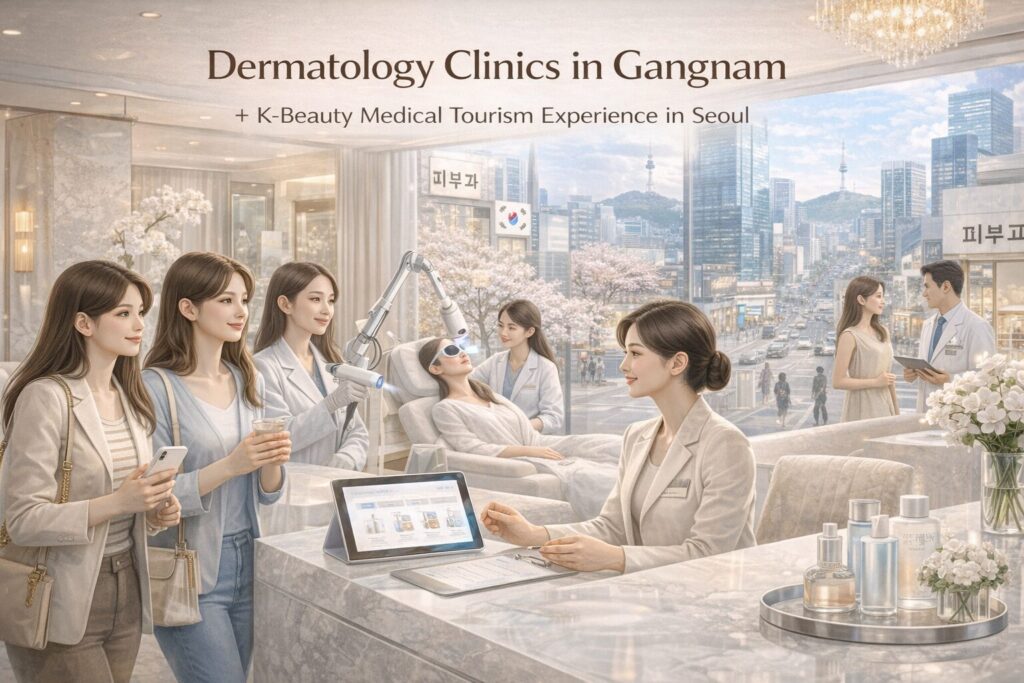
    K-beauty medical tourism experience in Seoul

    Introduction: Beauty Is No Longer Bought — It Is Experienced

    Until recently, global beauty travel followed a predictable pattern.
    Tourists flew to Paris, Milan, or New York to shop for luxury cosmetics, perfumes, and fashion. Beauty was something you bought, packaged in branded bags and duty-free boxes.

    That pattern is breaking.

    In 2026, a growing share of global travelers are flying to Seoul not to shop — but to manage their skin, consult dermatologists, receive treatments, and return home with prescriptions rather than handbags.

    This is not a fad.
    It is a structural transformation at the intersection of beauty, healthcare, and lifestyle systems.


    1. The Rise of “Glowmads”: Why Beauty Now Shapes Travel Decisions

    According to Skyscanner’s Travel Trends 2026, 33% of global travelers now rank local beauty culture as a primary factor when choosing a destination.

    These travelers are labeled “Glowmads” — beauty nomads who plan trips around:

    • Skin treatments
    • Wellness routines
    • Dermatology clinics
    • Pharmacies and functional products

    Seoul is repeatedly identified as a global symbol of beauty culture, not because of branding, but because of results, accessibility, and systemization.


    2. From Luxury Shopping to Clinics and Pharmacies

    On the streets of Myeongdong and Gangnam, the visual signals have changed.

    • Large duty-free shopping bags → declining
    • Small pharmacy envelopes → increasing
    • Dermatology appointment cards → common

    This shift reflects a deeper change in consumer logic:

    Global consumers no longer prioritize ownership. They prioritize outcomes.

    According to coverage cited by The Wall Street Journal, many American women now structure trips to Seoul around pre-booked dermatology schedules, often receiving procedures that would cost USD 5,000+ in the U.S. for a fraction of that price — even after accounting for flights and lodging.


    3. Medical Tourism Data Confirms Structural Demand

    The numbers support what streets and clinics already show.

    Based on Daol Securities data for 2025 medical tourism spending:

    • Total medical tourism spending: KRW 2.08 trillion (+65% YoY)
    • Dermatology spending: KRW 1.19 trillion (+87% YoY)
    • December 2025 alone marked another all-time high, surpassing prior records

    This growth is not seasonal.
    It reflects repeat visitation, referral-based demand, and system trust.

    Skin care has moved from a discretionary expense to a planned health-and-lifestyle investment.


    4. Why Seoul Wins: Cost Is Not the Only Advantage

    Price alone does not explain this migration.

    Seoul’s advantage lies in integration:

    • Dermatology clinics operate alongside pharmacies
    • Functional cosmetics align with post-procedure care
    • Devices, prescriptions, and skincare routines are synchronized

    This ecosystem produces continuity, something fragmented systems struggle to replicate.

    In contrast, many Western markets separate:

    • Medical care
    • Beauty products
    • Lifestyle routines

    Seoul compresses them into a single, navigable experience.


    5. CES 2026: Beauty Enters the Systems Era

    At CES 2026, Korean companies did not present beauty as packaging or branding.

    They presented:

    • AI-based skin diagnostics
    • Home-use medical-grade devices
    • Data-driven personalization
    • Longevity-focused design

    The message was clear:
    Cosmetics are no longer the product. The system is.

    Beauty is now treated as an output, not an input.


    6. From Products to Platforms: Why This Matters Globally

    This explains why global companies are repositioning:

    • Hair loss, scalp care, and longevity receive more investment
    • Biotechnology and RNA research enter beauty pipelines
    • Devices blur boundaries between cosmetics and medical tools

    Positioning innovation as:

    • cosmetics
    • functional cosmetics
    • or medical-device-adjacent solutions

    allows faster development, lower regulatory friction, and global scalability.

    This is not accidental. It is strategic.


    7. America’s Parallel Shift: Food, Health, and Skin Converge

    The same structural logic appears in the U.S.

    Reports such as America’s Real Food Revolution highlight how consumers increasingly link:

    • diet
    • inflammation
    • metabolic health
    • skin aging

    Beauty is being reframed as a systemic health signal, not a surface issue.

    This convergence explains why:

    • Skin clinics attract travelers
    • Pharmacies outperform luxury counters
    • Subscription routines replace impulse purchases

    8. Why This Trend Is Built for Search, Not Virality

    This topic performs well for search engines because it answers persistent questions, not momentary curiosity:

    • Why is Seoul cheaper and more effective for skin care?
    • Why are tourists skipping luxury shopping?
    • Why is beauty becoming medicalized?
    • Why does K-beauty feel more “systematic” than Western brands?

    These are high-intent, evergreen queries, ideal for long-term organic traffic and ad relevance.


    Conclusion: Beauty Has Become Infrastructure

    What the world is witnessing is not a K-beauty trend.

    It is the emergence of beauty as infrastructure:

    • healthcare
    • data
    • lifestyle
    • and repeatable outcomes

    Seoul did not become a beauty destination because of hype.
    It became one because it solved beauty as a system.

    And systems — unlike trends — scale globally.


    🔑 Key Takeaway for Global Readers

    People no longer travel to buy beauty.
    They travel to become better maintained.

    In 2026, beauty is no longer something you apply.
    It is something you design, manage, and experience.

    This article is for informational purposes only and does not constitute medical or professional advice.