
Category: ③ Everyday Skincare & Consumer Experience

  • The Structural Logic of K-Beauty: Why Layering Is a Strategy, Not a Trend

    Moving Beyond the 10-Step Myth
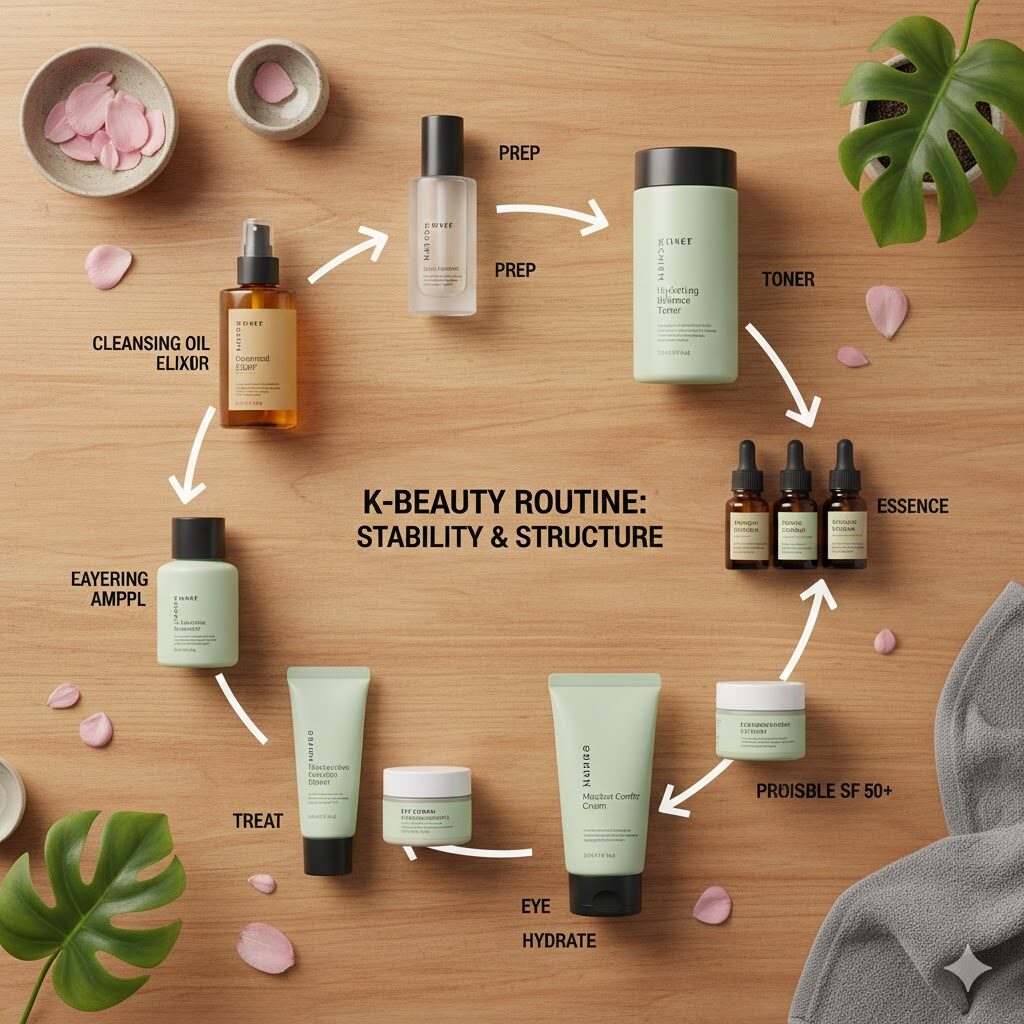
    K-Beauty skincare routine

    Global interest in K-Beauty often begins with curiosity about the so-called “10-step skincare routine.” While the number itself has become a popular talking point, it oversimplifies what Korean skincare is fundamentally about. K-Beauty is not a rigid formula defined by steps, but a structural approach to skin stabilization.

    Unlike many Western skincare philosophies that emphasize rapid transformation through high-strength active ingredients, K-Beauty focuses on creating an environment where the skin can recover, adapt, and maintain balance over time. Layering is not an aesthetic ritual—it is a deliberate strategy designed to support the skin’s natural repair mechanisms.

    The Science Behind Incremental Absorption

    At the core of K-Beauty lies the principle of incremental stimulation. Human skin is biologically wired to respond cautiously to sudden, intense changes. When exposed to a single high-concentration product, the skin barrier may interpret this as stress, leading to inflammation, redness, or reduced absorption efficiency.

    Layering lightweight, water-based formulas before applying richer creams creates a functional gradient. Each layer prepares the skin to receive the next, allowing active ingredients to penetrate without overwhelming the barrier. This approach mirrors how the skin naturally absorbs moisture from its environment—gradually, not abruptly.

    From a physiological standpoint, skin repair is not triggered by intensity but by consistency. The barrier strengthens when it receives steady, predictable signals rather than sporadic shocks.

    Why Predictability Is Essential for Skin Recovery

    One of the most common frustrations among skincare users is the perceived lack of immediate results. However, this impatience often misunderstands how skin recovery works. Before visible improvements can occur, the skin prioritizes stability. If a routine is frequently altered or overly aggressive, the skin redirects its resources toward defense rather than renewal.

    K-Beauty routines function as stabilizers. By maintaining a predictable structure through consistent layering, the skin gradually shifts out of survival mode. Over time, this calm state allows hydration levels to normalize, inflammation to subside, and texture to improve naturally.

    The widely admired “glass skin” effect is not the result of a single miracle product. It is the visible outcome of a barrier that is deeply hydrated, evenly supported, and free from chronic irritation.

    Strategic Consistency Versus Short-Term Intensity

    In skincare, effectiveness is not measured by strength alone but by appropriateness and duration. High-intensity treatments such as exfoliating acids or retinoids can be beneficial when used strategically. However, without a stable foundation, these treatments often contribute to long-term sensitivity and barrier damage.

    K-Beauty emphasizes sustainability over quick fixes. The skin is treated as a living ecosystem that responds to care patterns, not as a surface to be corrected. This philosophy aligns with a broader global shift toward mindful and preventative beauty practices.

    Layering allows users to adjust intensity without disrupting structure. On days when the skin feels compromised, lighter layers can maintain hydration without stress. On stronger days, targeted treatments can be added without destabilizing the routine.

    Why Layering Resonates With Global Skincare Trends

    The global popularity of K-Beauty skincare routines reflects a growing awareness that healthy skin is built, not forced. As consumers become more informed, interest shifts from instant results to long-term skin health. Educational content explaining why routines work—not just how—has gained higher engagement and trust across search platforms.

    This explains why search terms related to “K-Beauty skincare routine,” “skin barrier recovery,” and “layering skincare products” continue to perform well globally. Users are seeking frameworks, not shortcuts.

    Layering as a Behavioral System, Not a Cosmetic Habit

    One of the least discussed aspects of K-Beauty layering is its behavioral consistency. Skincare routines are not only chemical interactions but also behavioral patterns that train both the skin and the user. When routines become overly complex or frequently modified, adherence drops, and the skin loses exposure consistency.

    Layering simplifies decision-making. Each step has a defined role—hydration, calming, sealing—reducing uncertainty. This behavioral clarity contributes to routine stability, which directly affects long-term skin outcomes.

    From a systems perspective, K-Beauty routines reduce volatility. Rather than reacting aggressively to short-term skin issues, layering allows gradual correction while maintaining baseline hydration and protection.

    Environmental Adaptability and Seasonal Layering

    Another critical advantage of layering is environmental adaptability. Skin behaves differently depending on humidity, temperature, pollution exposure, and indoor climate conditions. K-Beauty routines are inherently modular, allowing users to add or remove layers without breaking the overall structure.

    In dry winters, hydration layers can be increased. In humid summers, lighter emulsions may replace occlusive creams. This adaptability ensures continuity while respecting environmental stressors, which is particularly relevant for global users living in diverse climates.

    Western skincare routines, by contrast, often rely on fixed-strength products that require complete replacement when conditions change. Layering avoids this disruption.

    Barrier-Centric Skincare and Long-Term Resilience

    Modern dermatological research increasingly emphasizes barrier health as the foundation of all visible skin improvements. A compromised barrier undermines the effectiveness of even the most advanced active ingredients.

    K-Beauty’s layering strategy aligns with this barrier-centric understanding. Each layer supports lipid balance, moisture retention, and inflammation control. Over time, this leads to increased tolerance, reduced sensitivity, and more predictable skin behavior.

    This is why users often report that their skin becomes “less reactive” after adopting consistent layering routines. The improvement is structural, not superficial.

    Why Global Users Are Shifting Toward Routine-Based Skincare

    As skincare literacy grows worldwide, users are moving away from product-centric thinking toward routine-based frameworks. Searches increasingly reflect this shift, focusing on “how routines work” rather than “which product is strongest.”

    K-Beauty appeals to this mindset because it provides a repeatable, logic-driven system. The emphasis on process over promises resonates with users seeking sustainable skin health rather than temporary visual fixes.

    This explains why K-Beauty content continues to perform well across global search engines. It addresses the “why” behind results, not just the “what.”

    Final Perspective: Stability Creates Results

    Skincare does not improve skin by force—it improves skin by cooperation. Layering works because it respects the skin’s natural preference for stability, rhythm, and gradual change.

    K-Beauty’s structural logic transforms skincare from a reactive habit into a long-term strategy. For global users, this approach offers clarity, adaptability, and trust—qualities that extend beyond trends and into lasting relevance.


    Key Takeaway: Skin Health Is Structural

    Understanding skincare as a structural process changes expectations and outcomes. Whether a routine includes three steps or ten, the objective remains the same: support the skin’s natural rhythm and recovery cycle. In K-Beauty, patience is not passive—it is an active strategy.

    Layering works because it respects how skin functions. It prioritizes stability before transformation and consistency before intensity. This is why K-Beauty continues to earn global trust—not as a trend, but as a system grounded in logic, biology, and long-term care.


    ⚠️ Disclaimer
    This content is for informational purposes only and does not constitute medical advice.
  • Why Americans Are Searching for Korean Beauty Clinics, Devices, and Skin Treatments in 2026

    From Products to Procedures, and Why Korea Became the Global Reference Point

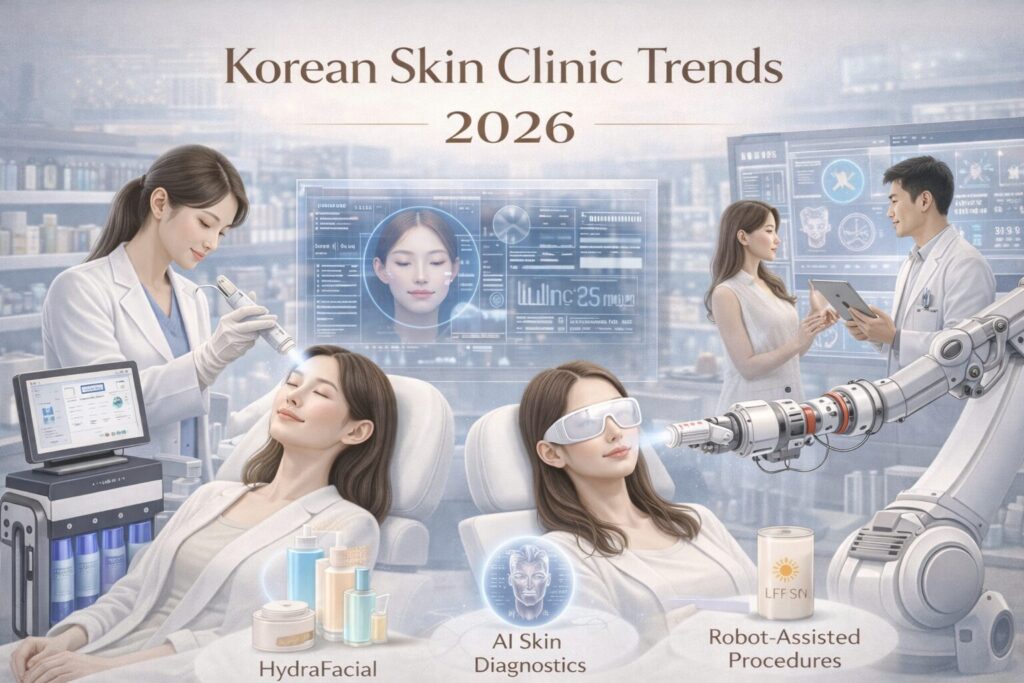
    korean-skin-clinic-trends-2026

    For most American consumers, Korean beauty once meant skincare products.
    Sheet masks, glass-skin routines, and viral serums dominated search results and social media feeds.

    But in 2026, something has changed.

    Search behavior, travel data, export statistics, and medical spending trends all point in the same direction:
    global interest has moved beyond Korean products to Korean beauty systems.

    Americans are no longer just asking what Koreans use.
    They are asking what Koreans actually do for their skin.


    The Shift Behind the Search Explosion

    Recent global data explains why keywords like:

    • “Korean skin clinic”
    • “beauty tourism Korea”
    • “Korean laser treatment”
    • “HIFU Korea”
    • “best skin treatment in Seoul”

    are climbing rapidly in U.S.-based searches.

    In 2025 alone:

    • Korea recorded record-high cosmetics exports, with the United States becoming the largest destination, surpassing China.
    • Medical tourism spending exceeded USD 1.5 billion, with skin clinics accounting for the majority.
    • Monthly medical tourism spending set new records consecutively, driven by repeat dermatological procedures rather than surgery.
    • Foreign spending on beauty and wellness products rose over 40% year-over-year.

    These are not influencer trends.
    They are consumer behavior shifts.


    Why Skin Clinics — Not Plastic Surgery — Lead the Boom

    When Americans hear “medical tourism,” plastic surgery often comes to mind.
    But Korea’s growth tells a different story.

    The fastest-growing segment is dermatology-based aesthetic care.

    Why?

    Because skin treatments are:

    • Non-invasive or minimally invasive
    • Safe for repeat visits
    • Focused on skin quality, aging prevention, and maintenance
    • Suitable for both men and women
    • Compatible with busy schedules

    Procedures like laser toning, RF tightening, and ultrasound lifting do not require weeks of recovery.
    Many international visitors schedule them between sightseeing, shopping, and work travel.

    Skin care has become maintenance, not transformation.


    The Technology Factor Americans Are Paying Attention To

    Another reason U.S. interest has intensified is Korea’s dominance in energy-based beauty devices.

    Korean companies lead globally in:

    • High-Intensity Focused Ultrasound (HIFU)
    • Radiofrequency (RF) skin tightening
    • Laser-based rejuvenation
    • AI-guided skin diagnostics

    At CES 2026, Korean beauty-tech companies stood out not for branding, but for results-oriented design.

    Key features repeatedly highlighted:

    • AI-based skin analysis
    • Device + skincare integration
    • Data-backed personalization
    • Longevity-focused treatment models

    For American consumers increasingly skeptical of marketing claims, visible outcomes supported by data matter more than ever.


    Why Korea Succeeded Where Others Didn’t

    Many countries offer cosmetic procedures.
    Few have built a repeatable, scalable beauty ecosystem.

    Korea’s advantage comes from integration:

    • Clinics that work with device manufacturers
    • Skincare designed for pre- and post-procedure care
    • Retail channels aligned with clinical routines
    • Tourism infrastructure adapted to medical visitors

    Instead of selling isolated products, Korea exports processes.

    This is why visitors don’t just leave with treatments — they leave with routines, subscriptions, and long-term purchasing habits.


    What China’s Reopening Means — and Why It Matters Less to Americans

    Recent discussions around China potentially easing restrictions on Korean businesses have made headlines.

    But for U.S. consumers and brands, the significance is limited.

    During years of geopolitical uncertainty, Korean beauty companies:

    • Diversified markets aggressively
    • Built strong U.S., Japanese, and European positions
    • Reduced reliance on any single country

    China now represents optional upside, not core survival.

    For Americans, this reinforces confidence:
    Korean beauty’s growth is globally anchored, not regionally fragile.


    Why the U.S. and Japan Anchor the “Second Wave” of K-Beauty

    The current phase of Korean beauty expansion is no longer driven by novelty.

    It is stabilized by two markets:

    United States

    • High acceptance of clinical skincare
    • Large and diverse consumer base
    • Strong online-to-offline conversion
    • Retail presence across Amazon, ULTA, Costco, Walmart, and TikTok Shop

    Japan

    • Deep skincare culture
    • Long-term routine adoption
    • High trust in safety and efficacy
    • Strong offline retail networks

    Together, these markets shape K-Beauty’s second wave — defined by consistency, not virality.


    Why This Topic Attracts Massive U.S. Search Volume

    This subject intersects multiple high-interest American concerns:

    • Aging populations
    • Preventive health
    • Results-driven skincare
    • Experiential travel
    • Technology-backed wellness

    Korean beauty sits at the center of all five.

    That is why search interest continues to rise — not spike and fade.


    What Americans Are Really Searching For

    The underlying question is no longer:

    “What Korean product is trending?”

    It has become:

    “What actually works — and how do I experience it myself?”

    This explains the growth of:

    • Beauty-focused travel
    • Clinic-centered routines
    • Device-assisted home care
    • Subscription-based skincare

    Beauty is no longer judged at purchase.
    It is judged over months, outcomes, and repeat behavior.


    Final Takeaway for Global Readers

    Korean beauty in 2026 is not about exporting creams or trends.

    It is about exporting:

    • Systems
    • Technology
    • Experience
    • Trust

    That is why Americans are not just buying Korean beauty —
    they are traveling, researching, and restructuring their routines around it.

    This shift is not temporary.

    It is the new baseline.

    This article is for informational purposes only and does not constitute medical or professional advice.

  • How K-Beauty Became a Daily Habit, Not a Trend

    The Real Structure Behind Korean Skincare’s Global Staying Power

    Most beauty trends arrive loudly and disappear quietly.

    K-Beauty followed a different path.
    Instead of promising dramatic overnight results, Korean skincare built something less flashy—but far more durable: daily usability.

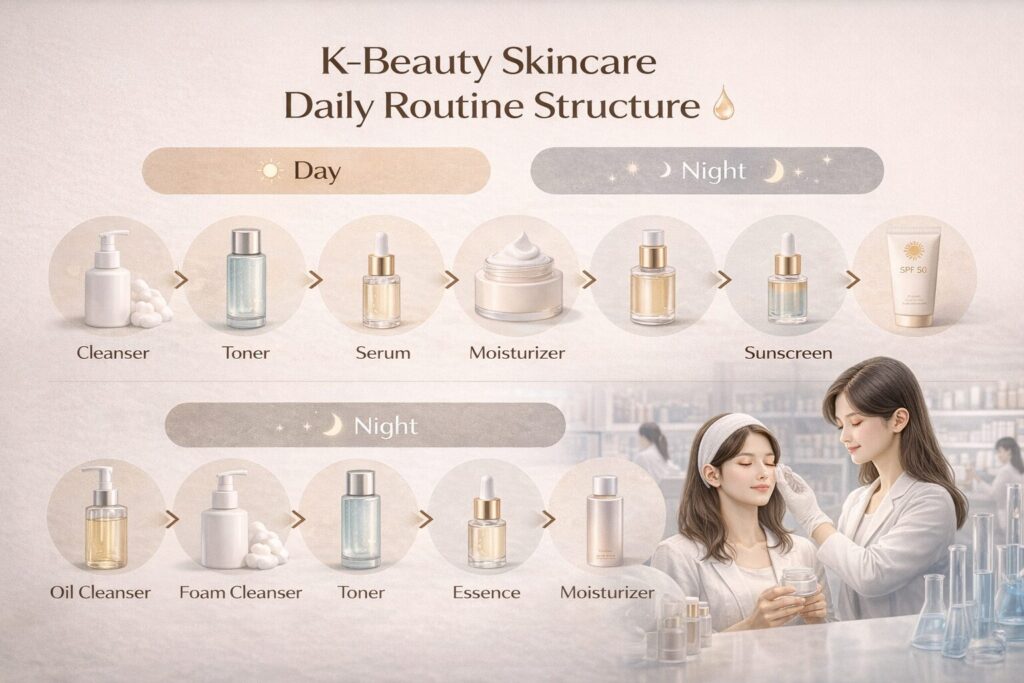
    k-beauty skincare daily routine structure

    This is why people who try K-Beauty rarely describe it as “amazing” on day one.
    Instead, they say things like:

    • “My skin feels calmer.”
    • “Nothing reacts badly anymore.”
    • “I stopped thinking about my skincare.”

    That reaction is not accidental. It is the result of how K-Beauty products are designed, tested, and integrated into everyday routines.

    This article explains why K-Beauty works as a habit, how ingredients and routines are structured for long-term use, and why this approach continues to spread globally—without relying on hype.


    K-Beauty Is Built Around Frequency, Not Intensity

    Many Western skincare products are optimized for impact:
    high concentrations, short treatment cycles, visible changes.

    K-Beauty starts with a different assumption:

    “If someone uses this every day for months, will their skin still feel comfortable?”

    That single question reshapes everything.

    • Ingredient levels are chosen for repeat exposure
    • Textures are designed to layer without overload
    • Irritation risk is minimized before performance is maximized

    This is why K-Beauty products often feel gentle—even boring—at first.
    They are not designed to impress once. They are designed to stay.


    Ingredient Strategy: Familiar, Adjustable, Testable

    K-Beauty does not chase novelty for its own sake.
    Instead, it repeatedly refines ingredients consumers already tolerate well.

    Common patterns include:

    • Iterative upgrades of known ingredients
      (e.g., different molecular weights, fermentation, encapsulation)
    • Pairing active ingredients with calming buffers
    • Testing combinations rather than single “hero” ingredients

    This approach reduces consumer risk.

    A product that fails quickly disappears from daily routines.
    A product that feels safe gets reused, repurchased, and recommended.

    That is why ingredients like centella asiatica, panthenol, ceramides, and hyaluronic acid remain central—despite not being new.


    Why Multi-Step Routines Actually Increase Retention

    At first glance, K-Beauty routines appear complicated.

    In reality, they are modular, not rigid.

    Each step has a narrow role:

    • cleanse
    • hydrate
    • support barrier
    • seal moisture

    If one step is skipped, the routine still functions.

    This flexibility matters internationally.
    Different climates, lifestyles, and skin types can adjust the routine without abandoning it.

    Instead of forcing consistency, K-Beauty allows adaptation—and that keeps users engaged longer.


    Consumer Testing Shapes Product Evolution

    One of K-Beauty’s least visible strengths is how quickly consumer feedback loops back into development.

    Common feedback that influences reformulation includes:

    • absorption speed before makeup
    • seasonal heaviness or dryness
    • fragrance persistence
    • interaction with sunscreen or foundation

    Rather than treating these as minor issues, brands often:

    • adjust textures
    • split lines by skin condition
    • release seasonal or sensitivity-focused variants

    This creates a sense that products are responsive, not static.

    Over time, that responsiveness builds trust.


    Why Global Consumers Describe K-Beauty as “Reliable”

    When surveyed, international users rarely describe K-Beauty as revolutionary.

    Instead, they say it feels:

    • predictable
    • calming
    • easy to continue using

    That reliability matters more than novelty.

    In saturated beauty markets, trust outperforms excitement.
    Products that quietly work become part of routine life—and routines are difficult to replace.

    This is how K-Beauty shifted from trend status into a stable category in markets like the U.S. and Japan.


    K-Beauty Sells Behavior, Not Transformation

    The real export of K-Beauty is not products.
    It is behavior.

    • daily care instead of corrective fixes
    • moderation instead of extremes
    • maintenance instead of constant change

    This mindset aligns naturally with modern wellness culture, where consistency is valued more than intensity.

    That is why K-Beauty does not need constant reinvention.
    It evolves by staying useful.


    Key Takeaway

    K-Beauty’s global success is not driven by trends or viral moments.

    It is driven by:

    • repeatable routines
    • low-risk ingredient strategies
    • consumer-driven refinement
    • and products designed to be lived with, not showcased

    That combination turns skincare into habit—and habits last.


    Disclaimer
    This article is for general informational purposes only and does not provide medical or dermatological advice.

    This article is for informational purposes only and does not constitute medical or professional advice.

  • 🌸 The Real Drivers of Skin Aging in 2026

    From “What You Apply” to “What You Eat and How You Choose”

    This article analyzes recent research and industry reports from early 2026 to explain how skin aging is increasingly shaped by diet, lifestyle, and consumer decision-making rather than skincare products alone.


    🧭 Introduction: Why Skin Aging Is No Longer a Vanity-Table Problem

    For decades, skin care was treated as a routine that began and ended at the bathroom mirror.
    However, research and reporting published in early 2026 clearly challenge this assumption.

    Recent findings on sodium intake and skin aging, dietary vitamin C absorption, and shifts in K-beauty retail driven by foreign consumers all point to the same conclusion:

    Skin reflects how we live before it reflects what we apply.

    In other words, the pace of skin aging is now better explained by daily habits, nutritional patterns, and product selection behavior than by the number or price of cosmetics used.


    🧂 1. The Most Overlooked Accelerator of Skin Aging: Excess Salt Intake

    Skin aging progresses gradually, which makes its causes easy to underestimate.
    Yet dermatologists and nutrition researchers consistently identify high sodium intake as one of the fastest ways visible skin damage appears.

    The World Health Organization recommends consuming less than 2,000 mg of sodium per day.
    In reality, average intake in both Korea and the United States exceeds this threshold by a wide margin.

    💧 How Excess Sodium Impacts the Skin

    When sodium intake remains high, several changes occur simultaneously:

    • Moisture balance is disrupted, leading to chronic dryness
    • Collagen synthesis is impaired, reducing elasticity and accelerating fine lines
    • Fluid distribution in blood vessels shifts, making skin appear swollen, dull, or uneven

    These effects are not cosmetic inconveniences—they directly influence structural skin aging.

    ⚠️ Sodium and Skin Conditions

    Research also links sodium intake to inflammatory skin conditions.
    Data shows that each additional gram of sodium consumed per day increases the likelihood of eczema aggravation by approximately 22 percent.

    As aging naturally weakens the skin barrier, excessive salt intake compounds this vulnerability.
    This makes sodium control a foundational component of anti-aging—not an optional lifestyle tweak.


    🍊 2. Why Eating Vitamin C Outperforms Applying It

    Vitamin C serums remain a winter skincare staple.
    However, recent research highlights a key limitation of topical application.

    The skin functions as a defensive barrier, making it structurally difficult for water-soluble vitamin C to penetrate deeply when applied externally.

    🧬 How Dietary Vitamin C Reaches Skin Cells

    Vitamin C consumed through food follows a different biological route.

    Human cells contain a specialized transporter known as SVCT (Sodium-dependent Vitamin C Transporter).
    This mechanism actively draws vitamin C from the bloodstream into cells—including skin cells.

    As a result, dietary vitamin C can reach the dermis more efficiently than topical forms.

    📊 Evidence From an 8-Week Clinical Study

    A controlled study conducted at the University of Otago in New Zealand provides measurable evidence.

    After eight weeks of daily consumption of vitamin-C-rich fruits:

    • Skin density increased by approximately 48 percent
    • Epidermal regeneration speed increased by roughly 30 percent

    These outcomes reflect structural recovery, not short-term surface effects.

    ⏳ Long-Term Investment, Not a Quick Fix

    Vitamin C is not stored in the body and is continuously excreted.
    This means benefits depend on consistent daily intake, not occasional supplementation.

    Researchers emphasize that dietary vitamin C works as a long-term anti-aging investment, strengthening the skin’s foundation rather than offering immediate cosmetic correction.


    🏬 3. How Skin Awareness Is Reshaping K-Beauty Retail

    Changing perceptions of skin health are also reshaping how beauty products are sold.

    Reports released in early January 2026 show that foreign visitors are increasingly purchasing from K-beauty specialty stores outside traditional chains.

    These stores emphasize selection over scale.

    🧠 Defining Features of the New K-Beauty Retail Model

    Emerging K-beauty stores share common traits:

    • Limited brand counts with concern-based curation
    • Focus on dermatological, outlet, or functional positioning
    • Strategic placement near cultural and tourist districts such as Bukchon, Samcheong-dong, and Gwangjang Market

    Rather than maximizing product exposure, these stores reduce choice overload and guide decision-making.

    🌍 Rising Demand From Foreign Consumers

    From 2018 to 2024, foreign spending on beauty and health products grew at an average annual rate of 19.1 percent, followed by a surge exceeding 40 percent in 2025.

    This trend suggests a shift from impulse buying to lifestyle adoption.
    Foreign consumers are not just purchasing K-beauty—they are adopting its underlying care philosophy.


    🧩 4. Conclusion: Skin Care in 2026 Means Total Management

    Viewed together, these studies and industry reports deliver a clear message:

    Skin aging cannot be slowed by a single product or ingredient.

    Effective long-term care requires:

    • Managing sodium intake
    • Maintaining consistent nutritional support, such as vitamin C
    • Selecting products through reliable, purpose-driven retail environments

    Only when these factors align does skin show stable, sustainable improvement.


    🌼 Key Takeaway

    Skin is an honest indicator.

    It responds less to what is applied today
    and far more to the habits repeated every day.

    This article is for informational purposes only and does not constitute medical or professional advice.

  • 🧊 In-Depth Beauty Damage Guide Across Winter Sports

    🌬️ Environmental Differences and a Step-by-Step Framework for Protection and Recovery

    ❄️ Winter sports expose the body to a combination of environmental stressors that rarely occur together in daily life.
    Low temperatures slow down skin function, strong winds accelerate moisture loss, dry air weakens the skin barrier, ultraviolet rays reflect off snow and ice, and constant friction from clothing and equipment irritates the surface of the skin.

    🧠 While these stressors are common across winter activities, each sport affects the skin in a different way, depending on exposure time, movement intensity, altitude, and gear usage.
    This guide takes a closer look at skiing, winter running, hiking, and golf, examining how each environment creates distinct beauty-related damage patterns, and how that damage can be managed through a clear structure of pre-activity prevention → in-activity protection → post-activity recovery.


    ⛷️ Skiing & Snowboarding

    High-Altitude, High-Speed Exposure and Concentrated Skin Damage

    🏔️ Skiing and snowboarding create one of the harshest environments for the skin. High altitude lowers humidity, while strong downhill wind strips moisture from the skin at an accelerated rate. At the same time, ultraviolet radiation is intensified by reflection from snow, often reaching areas of the face that are not normally exposed during other activities.

    ⚠️ The most common beauty damage in skiing and snowboarding includes severe dehydration of the skin’s outer layer, increased risk of photoaging on the cheeks and lower face, localized irritation caused by tight goggles and helmets, and repeated cracking of the lips.
    The contrast between sweat buildup inside protective gear and immediate exposure to cold air further disrupts the skin’s balance, leaving it tight and vulnerable.

    🛡️ Before activity, skin benefits from hydration followed by a thin protective layer that slows moisture loss without creating heaviness. Lip care should be applied well before exposure, not as a reaction once damage has begun.
    During activity, blotting sweat instead of rubbing, replacing damp face coverings, and reapplying lip protection during breaks helps prevent irritation from turning into inflammation.

    🧴 After activity, recovery should focus on restoring balance rather than aggressive treatment. Lukewarm cleansing, immediate hydration, and barrier reinforcement allow the skin to recover overnight, while lips and scalp benefit from gentle, intensive care rather than exfoliation.


    🏃 Winter Running

    Repetitive Friction and Cumulative Internal Dryness

    🌫️ Winter running may appear less extreme, but its impact on the skin builds gradually. Cold air is inhaled directly, drying the area around the mouth and nose, while masks and neck warmers repeatedly rub against the same sections of the face. Because running is often done several times a week, even minor irritation can accumulate into persistent discomfort.

    ⚠️ Typical beauty damage includes cracking around the lips, redness and breakouts along the jawline, and a feeling of tightness that originates from internal dehydration rather than surface dryness. Sweat produced during running cools rapidly afterward, worsening this internal imbalance.

    🛡️ Prevention before running should prioritize light hydration combined with friction-reducing protection, especially around the mouth area.
    During runs or rest periods, managing moisture inside masks and applying minimal hydration when tightness appears can prevent flare-ups.

    🧴 Post-run care is most effective when done immediately. Delaying moisturization allows dryness to set in deeper layers of the skin. Consistency is critical during weeks of frequent training, as recovery routines work best when repeated without interruption.


    🥾 Winter Hiking

    Long Exposure, Altitude Changes, and Circulatory Stress

    ⛰️ Winter hiking exposes the skin for extended periods, often combined with altitude changes and fluctuating temperatures. Unlike short-duration sports, the damage here is progressive, increasing steadily as time passes.

    ⚠️ The most common issues include overall dehydration of the skin, swelling or tightness caused by circulation changes, and roughness on the hands and feet due to prolonged use of gloves and boots. Wind exposure further intensifies the sensation of tight, fatigued skin by the time hikers descend.

    🛡️ Before hiking, protection should emphasize lasting moisture rather than lightweight textures that disappear quickly. Hands and feet deserve attention before exposure begins.
    During breaks, hydration and lip care help reduce cumulative stress, while managing moisture inside gloves prevents excessive softening followed by cracking.

    🧴 After hiking, recovery should be gentle and immediate. Instead of aggressive exfoliation, softening and replenishing the skin allows natural repair mechanisms to function more effectively overnight.


    ⛳ Winter Golf

    Wide Skin Exposure and Hidden Photoaging Risk

    🌤️ Winter golf often underestimates skin stress. Despite cooler temperatures, the face, neck, and hands remain widely exposed for long periods, allowing ultraviolet radiation and wind to quietly accumulate damage.

    ⚠️ Common beauty concerns include dryness around the eyes, visible fine lines intensified by wind, pigmentation risks from UV exposure, and rough texture on the hands caused by repeated glove use. Because movement is intermittent, the skin experiences long periods of direct exposure without relief.

    🛡️ Preventive care should focus on exposed areas, ensuring that protection lasts without discomfort.
    During play, moisturizing the hands and maintaining lip care during breaks helps preserve skin comfort.

    🧴 After the round, recovery should address both dryness and environmental stress, extending care beyond the face to include the neck and hands.


    👨‍🦱 Men’s vs. 👩‍🦰 Women’s Routines

    Realistic Differences in Post–Winter Sports Care

    🧍‍♂️ For men, the most important factor is sustainability. After winter sports, fatigue often leads to skipped steps, so care routines must remain simple and repeatable. Dryness is frequently ignored, especially when shaving and outdoor exposure occur on the same day, leading to prolonged irritation. Lips and hands are commonly overlooked, despite being among the most vulnerable areas.

    🧍‍♀️ Women often approach post-activity care from a preventive and long-term perspective. Awareness of pigmentation and UV exposure remains high even in winter, particularly after skiing or golf. Recovery routines tend to extend into the evening, covering not only the face but also the neck and hands, where aging signs appear quickly after repeated exposure.

    🔄 The difference is not about who does more, but about direction and consistency. Men benefit from simplicity that supports repetition, while women prioritize comprehensive, cumulative recovery.


    🧠 Conclusion

    What Skin Really Remembers

    ❄️ Winter sports test the limits of the skin. Cold, wind, dryness, UV reflection, and friction each place stress on the body, and together they can overwhelm unprotected skin.

    ✅ Yet winter sports themselves are not the problem. The real issue is repeated exposure without management. When pre-activity prevention, in-activity protection, and post-activity recovery are respected as a structure, the skin proves far more resilient than expected.

    📌 Skin does not blame exercise.
    📌 Skin does not blame the cold.
    👉 It only remembers unmanaged repetition.


    💬 Reader Participation

    Your Experience Shapes Better Care

    🗣️ Everyone’s skin reacts differently to winter sports.
    Some struggle most with lips, others with recurring breakouts, and some feel the impact most strongly the day after activity.

    ❓ What has been your biggest skin concern during winter sports?
    ❓ Are there specific trouble areas that appear repeatedly after skiing or running?
    ❓ Which recovery habits have genuinely helped you?
    ❓ What is the hardest part of maintaining your routine?

    🧩 Shared experiences turn information into practical guidance. The more voices contribute, the deeper and more useful this conversation becomes.

    This article is for informational purposes only and does not constitute medical or professional advice.

  • 🌾 From Rice & Grain Cosmetics to Expiration and Storage

    Recently, cosmetics made with rice, barley, beans, and fermented grains have been gaining renewed attention. At the same time, searches about cosmetic expiration dates, proper storage, and how to dispose of used products are also increasing. Rather than listing trending keywords, this article organizes the entire lifestyle surrounding grain-based cosmetics. It explains what to use, how long to use it, how to store it, and when to discard it as one continuous flow.

    ━━━━━━━━━━━━━━━━━━━━
    1️⃣ Why Rice and Grain Cosmetics Are Returning
    ━━━━━━━━━━━━━━━━━━━━

    Rice and grain-based ingredients are not a new trend but rather a reinterpretation of long-standing care practices. In the past, methods like washing the face with rice water were everyday habits meant to reduce irritation. Today, these practices are explained through concepts such as low irritation, barrier support, and long-term stability. The key point is that grain-based cosmetics do not aim for immediate visible change. Instead of exfoliating aggressively or forcing strong reactions, they support the skin’s ability to maintain balance. For this reason, usage duration and storage conditions have a greater impact on results.

    ━━━━━━━━━━━━━━━━━━━━
    2️⃣ Who Grain and Rice-Based Cosmetics Are Suitable For
    ━━━━━━━━━━━━━━━━━━━━

    Rice and grain-based cosmetics are generally suitable for skin that becomes easily dry with seasonal changes, skin with accumulated irritation, recovery phases after exfoliation, or periods when the skin needs rest after strong active products. On the other hand, those seeking immediate brightening, lifting, or exfoliating effects may feel less satisfied. Grain-based cosmetics function less as tools to “change” the skin and more as tools to “prevent breakdown.”

    ━━━━━━━━━━━━━━━━━━━━
    3️⃣ Expiration Date vs. Period After Opening: Why It’s Confusing
    ━━━━━━━━━━━━━━━━━━━━

    Many people confuse expiration dates with the period after opening. The expiration date refers to how long a product remains safe while unopened. The period after opening refers to stability after exposure to air, hands, and temperature changes. Even if a product has two years left before expiration, if its period after opening is six months, it is recommended to stop using it after six months. Products containing rice, grains, or fermented ingredients often use milder preservatives, making post-opening management especially important.

    ━━━━━━━━━━━━━━━━━━━━
    4️⃣ Storage Points That Matter More for Grain-Based Cosmetics
    ━━━━━━━━━━━━━━━━━━━━

    Rice and grain ingredients are sensitive to temperature and humidity. Bathroom shelves, window areas with direct sunlight, and spots near heaters should be avoided. The ideal storage location is a drawer or vanity area with stable temperature and no direct light. For jar-type products, washing hands before use alone can significantly extend product life. Refrigeration is not automatically beneficial. Repeated temperature changes can destabilize formulas, making room-temperature storage the basic rule.

    ━━━━━━━━━━━━━━━━━━━━
    5️⃣ Signs That Indicate You Should Stop Using a Product
    ━━━━━━━━━━━━━━━━━━━━

    Even if the expiration date has not passed, use should be discontinued if separation occurs, unfamiliar odors develop, color changes appear, or sudden stinging sensations are felt. Grain and fermented cosmetics tend to show spoilage signals more clearly due to their natural characteristics. Continuing to use a product “just a little longer” often leads to skin trouble.

    ━━━━━━━━━━━━━━━━━━━━
    6️⃣ How to Dispose of Used Cosmetics Properly
    ━━━━━━━━━━━━━━━━━━━━

    Cosmetic containers are often made of mixed materials. Even plastic containers may include pumps, springs, and silicone parts that require separation. Remaining product should be wiped out with tissue or paper towels before disposal. Glass containers should have labels removed and be disposed of as glass. Throwing away cosmetics with product still inside increases environmental burden, so proper cleaning before disposal is recommended.

    ━━━━━━━━━━━━━━━━━━━━
    7️⃣ Realistic Recycling and Reuse Options
    ━━━━━━━━━━━━━━━━━━━━

    Not all cosmetic containers are recyclable, but many can be reused as cotton swab holders, small organizers, or travel containers after cleaning. Grain-based cosmetic packaging often has simple designs that make reuse easier. However, reusing containers again for skincare is not recommended for hygiene reasons. In practice, repurposing them as household items is more realistic than full recycling.

    ━━━━━━━━━━━━━━━━━━━━
    8️⃣ Common Habits of People Who Use Grain Cosmetics Well
    ━━━━━━━━━━━━━━━━━━━━

    People who are satisfied with grain-based cosmetics tend to have clear management standards. They check expiration dates, remember opening dates, designate storage locations, and stop using products without hesitation when changes appear. They view cosmetics not as consumables to use up, but as tools for care. As a result, both their skin condition and consumption habits become more stable.

    ━━━━━━━━━━━━━━━━━━━━
    🌼 Conclusion
    ━━━━━━━━━━━━━━━━━━━━

    Rice and grain cosmetics are not good simply because their ingredients are gentle. They represent a lifestyle of care that includes usage, storage, and disposal. What matters is not using products for a long time, but using them appropriately for one’s skin and environment. As care details accumulate, the skin responds quietly.


    ⚠️ Disclaimer
    This content is for informational purposes only and does not replace professional, legal, medical, or financial advice.


    This article is for informational purposes only and does not constitute medical or professional advice.

  • 🌿 Is Your Gentle Skincare Actually Hurting Your Skin?

    The belief that “gentle skincare is always safe” has long been treated as a given. Lower stimulation is assumed to automatically benefit the skin. Structurally, however, gentleness is not an absolute standard but a conditional one.

    1) Gentle does not mean no stimulation
    Gentle products do not imply zero stimulation. Most are designed around relatively lower intensity input. The issue is that skin does not remain most stable in a completely stimulus-free state. Skin builds rhythm through consistent input and repetition.

    2) Excessively low stimulation can disrupt skin rhythm
    Skin adapts best to predictable stimulation. When input becomes too weak or inconsistent, defensive responses lose their reference point. This can lead to heightened sensitivity or slower recovery, even when “gentle” products are used.

    3) Gentleness must be evaluated within context
    The same product can produce different results depending on season, frequency, layering order, and lifestyle environment. Applying the same level of gentleness across summer and winter, or indoor and outdoor-heavy periods, ignores structural differences. Gentleness is determined by usage conditions, not by the product alone.

    For years, “gentle skincare” has been positioned as the safest possible choice. Lower irritation, fewer active ingredients, and minimal stimulation are commonly assumed to equal healthier skin. This assumption is widespread, intuitive, and rarely questioned. However, when examined structurally, gentleness is not an absolute virtue—it is a conditional strategy.

    Skin is not a passive surface that simply benefits from the absence of stimulation. It is a responsive biological system that relies on rhythm, feedback, and adaptation. When gentleness is applied without context or adjustment, it can unintentionally destabilize that system.


    1) Gentle does not mean no stimulation

    “Gentle” products are often marketed as if they eliminate stimulation entirely. In reality, no skincare product is completely stimulus-free. Even water temperature, touch pressure, and application frequency create input.

    Most gentle formulations are better described as lower-intensity stimuli, not the absence of stimuli. The problem arises when users attempt to reduce stimulation indefinitely, assuming that less is always safer. Skin does not operate optimally in a vacuum. It requires repeated, recognizable signals to maintain barrier function and recovery cycles.

    Without consistent input, the skin loses its reference points. What appears to be protection can quietly become disorientation.


    2) Excessively low stimulation can disrupt skin rhythm

    Skin adapts best to predictable patterns. This includes cleansing routines, hydration cycles, and even mild exfoliation. When stimulation becomes too weak or irregular, the skin’s adaptive responses slow down.

    In such cases, users may experience paradoxical outcomes:

    • Increased sensitivity despite using “mild” products
    • Delayed recovery from minor irritation
    • A feeling that the skin never fully stabilizes

    These reactions are often misinterpreted as signs that the skin needs to become even gentler. Structurally, the opposite may be true: the skin lacks a stable rhythm to adapt to.


    3) Gentleness must be evaluated within context

    A key limitation of the “gentle is always safe” belief is that it ignores contextual variables. Skin does not respond to products in isolation.

    The same routine can behave very differently depending on:

    • Season (summer vs. winter)
    • Environmental exposure (indoor heating, outdoor activity, humidity)
    • Application frequency
    • Layering order
    • Lifestyle stress and sleep patterns

    Applying identical levels of gentleness across all conditions assumes that skin remains static. In reality, skin requirements shift continuously. Gentleness is therefore not a fixed product attribute but a relationship between usage conditions and skin state.


    4) K-Beauty focuses on structure, not softness

    K-Beauty is often misunderstood as a philosophy of extreme mildness. Structurally, it is closer to a system-based approach.

    Layering in K-Beauty is not about stacking gentle products blindly. It is a method of:

    • Distributing stimulation across steps
    • Observing real-time skin responses
    • Adjusting intensity gradually rather than eliminating it

    The objective is predictable reaction, not maximum softness. A stable skin response is prioritized over the absence of sensation. This distinction is critical and frequently overlooked outside structural skincare models.


    5) Stability comes from consistency, not minimal input

    Long-term skin stability is achieved through appropriate intensity applied consistently, not by continuously reducing stimulation.

    Skin responds more reliably to routines that:

    • Maintain similar input levels over time
    • Change gradually rather than abruptly
    • Respect adaptation cycles

    Constantly weakening routines can prevent the skin from completing its adaptive processes. In contrast, consistent, context-aware stimulation allows the skin to calibrate and recover more effectively.


    When Low-Stimulation Becomes Under-Stimulation

    Gentle skincare is not inherently safe.
    Skin requires predictable micro-stimulation to maintain barrier signaling.

    Over-simplified routines may reduce visible irritation while weakening long-term resilience.

    Signs of under-stimulation include:

    • Delayed recovery from minor stress
    • Increased reactivity to environmental changes
    • Texture dullness without dryness

    Skin stability emerges from regulated input, not absence of input.


    ⚠️ Disclaimer

    This content is for general informational purposes only and does not constitute medical advice. Individual skin conditions vary, and professional consultation may be required.

    🔗 Related Research

    This article is for informational purposes only and does not constitute medical or professional advice.